

This may not be the best of times for the government economic managers and sympathisers as they balttle to explain to the bewildered public why the promised elimination of overlapping of budgets have consistently failed.
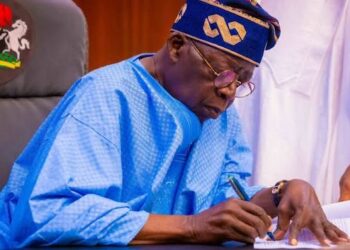
For the third consecutive year, President Bola Tinubu has missed the September deadline for presenting the next year’s budget to the National Assembly.
The Federal Government directed Ministries, Departments and Agencies (MDAs) to submit their 2027 personnel budget proposals by September 18, but September and October have passed, and November is ending, without action.
But, with barely 40 days left in 2026, the National Assembly is yet to receive even the 2027-2029 Medium-Term Expenditure Framework (MTEF) and Fiscal Strategy Paper (FSP), the document that, by law, must come first.
Why September Matters
Section 81(1) of the 1999 Constitution requires the President to lay estimates of revenue and expenditure before the National Assembly in the financial year preceding the budget year.
The Fiscal Responsibility Act 2007, Section 11(1)(b) is more specific as it says that the MTEF must be laid before the National Assembly “on or before the end of September.” That means, not later than four months before the next financial year.
The Broken Reset
While presenting the 2026 budget on December 19, 2025, Tinubu promised to end overlapping budgets.
“We are terminating the habit of running three budgets in one inflow. By March 31, 2026, all capital liabilities from previous years will be fully funded and closed. From April, Nigeria will operate on a single budget backed by a single revenue cycle — no overlaps, no excuses, no rollovers,” he declared.
That Deadline Was Missed.
In September 2026, the National Assembly approved a fourth extension of the 2025 capital budget, from 30 September to 31 December 2026. The 2025 capital budget, originally meant to expire on 31 December 2025, had already been extended to March, June and September.
Consequently, analysts say missing September collapses the whole timetable: MTEF, budget presentation, defence by MDAs, passage, and assent by 1 January.
Rewriting 2026 while 2027 Is Missing
While the 2027 budget is still awaited, Tinubu on 20 November asked the National Assembly to repeal and re-enact the 2026 budget by cutting it by N3.147 trillion, from N68.323 trillion to N65.176 trillion.
Revenue is now projected at N33.72 trillion. Capital expenditure at N26.23 trillion. Yet the fiscal deficit stays unchanged at N31.457 trillion and borrowing stays at N29.218 trillion. This has cause a lot of disquiet among analysts, wondering why deficits and borrowing remain same despite the budget review.
But the government says the revision regularises NNPCL spending on behalf of the Federation, covers under-provided debt service, and recognises already-issued capital warrants.
Recurring Pattern, Rather Than Accident
Before Tinubu, the late President Muhammadu Buhari had maintained the January-December budget cycle for three consecutive years. But under Tinubu, it has been dislocated every year:
Specifically, the 2024 budget was Presented November 29, 2023, signed 1 January 2024; 2025 Presented 18 December 2024, signed February 28, 2025 and that of 2026 was Presented December 29, 2025 as N58.18 trillion, later raised to N68.32 trillion and finally signed April 17, 2026
As at today, November 26, the 2027 budget has yet to be presented to the National Assembly and Nigeria is now implementing the 2024, 2025 and 2026 budgets simultaneously.
Why It Matters
Capital projects are stalling. For insurance, of the N18.53 trillion allocated for capital in 2025, only N834.8 billion, about 7.7% had been released between January and July.
Consequently, when and if the budget arrives in December, the National Assembly will have weeks, not months, to ‘scrutinise’ it, thereby exposing it to manipulations. In 2025, for instance , lawmakers inserted 11,122 projects worth N6.93 trillion.
Three budgets running at once also mean three sets of warrants, releases and accounts, making tracking almost impossible and weakening oversight.
The government is now talking of “harmonising” the 2026 and 2027 budgets and carrying balances forward. Until that is clarified, Nigeria is heading into 2027 without a fiscal plan, without a calendar, and without the single-budget reset Tinubu promised a year ago.
READ ALSO:Oil Rises On Supply Concerns As Iran Claims Mine Strikes On Ships
Analysts say president Bola Tinubu who promised efficient budget calendar year have consistently missed the deadlines for Third Straight Year, making Fiscal Calendar to have collapsed, having lost control of the fiscal year.
They argue that late budgets have stalled implementation of capital projects, even as investors and contractors could neither plan nor build.
Also, they argue that overlapping budgets create loopholes, as the three budgets running at once means three sets of warrants, three sets of releases, three sets of accounts. That is not just inefficiency, critics argue:
“That is not just inefficiency but also it creates an environment where diversion thrives because tracking becomes almost impossible,“ says another analyst.
The action also weakens the rule of law as it makes impunity to thrive, without consequences.
” When the President and the National Assembly jointly ignore the law, it signals to MDAs and states that deadlines do not matter,” he added.
Another analyst says, “It’s an irony that a President Who Promised one budget now runs three, from reset to rollover, thereby not able to fulfill his pledge of eliminating budget overlapping.”
WHAT NEXT — The Questions Nigerians Are Asking
Stakeholders are wondering whether the president would present a 2027 budget at all in 2026, or will 2026 and 2027 be ‘harmonised”?’ The government is hinting at harmonisation, which analysts say, amounts to merging two years into one.
They are also at a loss as to whether the National Assembly will pass the revised 2026 budget before 31 December, or will 2026 also roll over into 2027, or whether the 2027 budget, whenever it comes, be a real budget or just a carryover of unpaid 2025 and 2026 liabilities?.
Until those questions are answered, Nigeria is heading into 2027 without a fiscal plan, without a calendar, and without the single-budget reset Tinubu promised a year ago.