

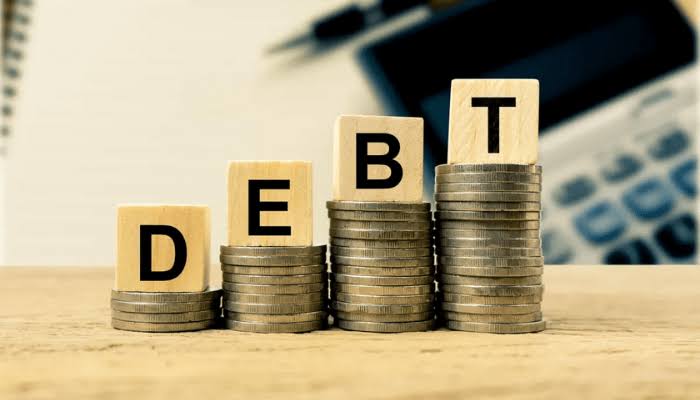
Nigeria is heading for a future where debt eats first and development eats what is left.
According to the Debt Management Office’s 2024 Debt Sustainability Analysis released on Monday, the Federal Government’s debt service-to-revenue ratio — 60.6% in 2024 — is projected to fall briefly to 44.9% in 2025, then climb steadily to 51% in 2026, 57.1% in 2027, and 71.7% by 2030, far above the DMO’s own 50% limit.
In plain terms, by 2030, about 72 kobo of every naira the Federal Government earns will go to paying creditors, leaving just 28 kobo for salaries, health, education, roads, power, security and social protection before any new borrowing.
The implication is stark: for the economy, less fiscal space to invest in growth; for wellbeing, tighter funding for hospitals, schools and safety nets that ordinary Nigerians depend on; and for development, a growing risk that Nigeria borrows to service old debts rather than to build the future.
Under a shock scenario of naira depreciation and weaker revenue, the DMO warns the ratio could hit 97.3% by 2030 — almost all revenue gone to debt service.
The report’s projections show that debt servicing will consume a growing share of Federal Government revenue over the coming years, even as the country’s public debt-to-GDP ratio is expected to decline.
The ratio is expected to increase progressively through the rest of the projection period, indicating that debt servicing will take up a larger proportion of government revenue.
The DMO attributes the projected increase to debt servicing growing faster than government revenue. Its shock scenario assumes a 30% exchange rate depreciation, a 2% decline in real GDP and a 2.5% reduction in revenue. By comparison, the baseline scenario assumes an exchange rate of N1,500 to the dollar, real GDP growth of 4.8% and a primary balance of 3.8%.
The report also projects that the public debt-to-GDP ratio will decline from 53.7% in 2024 to 27.3% by 2030 under the baseline scenario, compared with 34.6% under the shock scenario. However, the lower debt-to-GDP ratio does not eliminate concerns about the cost of servicing the debt relative to government revenue.
DMO warns of rising debt risks
The DMO described Nigeria’s public debt sustainability as moderate but highly vulnerable to weak revenue mobilisation, exchange rate devaluation and global uncertainties.
READ ALSO:IMF’s Georgieva Tasks Central Banks On Slowdown In AI-driven Growth Amid Market Volatility
It identified elevated financing, refinancing and foreign exchange risks in the country’s debt portfolio, with several indicators exceeding the thresholds set in its analysis.
Nigeria’s average Eurobond spread stood at 975.58 basis points between October 2 and December 31, 2024, above the 600-basis-point threshold. The DMO said the figure reflects higher borrowing costs and an increase in the cost of raising new debt.
The annual change in the share of short-term debt in total public debt was 1.8%, exceeding the 1% threshold. The report linked this to increased Nigerian Treasury Bills issuance and the associated refinancing risks.
The share of public debt held by non-residents also stood at 49%, above the 45% threshold, indicating greater exposure to foreign exchange risks.
The projections underline the challenge of managing debt obligations when government revenue does not grow fast enough to keep pace with debt servicing. A larger share of public funds committed to debt payments leaves less room for infrastructure, social services and other budget priorities.
DMO outlines fiscal reform measures
To address the risks, the DMO recommended sustaining the removal of the Premium Motor Spirit (PMS) subsidy and maintaining a unified and flexible exchange rate regime, which it said had helped boost government revenue.
It also called for stronger revenue mobilisation through tax reforms, expansion of the tax base, technology adoption and improved tax compliance. The report urged the government to improve public expenditure efficiency by directing funds towards growth-enhancing investments capable of expanding the economy and increasing revenue.
The report advised the government to consider privatisation or the sale of public assets and rely more on concessional financing where available.
Nigeria spent $1.82 billion servicing external debt in the first half of 2026, down 21.5% from $2.32 billion in the same period of 2025, even as interest payments to creditors, particularly Eurobond investors, increased.
The country also spent N5.28 trillion servicing domestic debt in the first half of 2026, with interest and rental payments accounting for N4.95 trillion.