


Geneva, Switzerland, 05 May 2026- /African Media Agency (AMA)/- Africa is producing more health workers than ever before, yet millions of people still lack access to care; hundreds of thousands of trained health professionals are unable to find jobs; and many of them are migrating. A deliberate shift linking education, employment, retention, quality, productivity and investment is needed to alter the paradox of growing health personnel numbers and unmet needs, a new report by the World Health Organization (WHO) finds.
Launched on 6 May 2026 at the Second Africa Health Workforce Investment Forum in Accra, the State of the Health Workforce in Africa 2026: Plan. Train. Retain. highlights a deepening crisis driven not by a lack of training alone, but by systemic failures in health worker employment, distribution and retention.
“Africa’s future depends on the strength of its human capital. Investing in our health workforce is not just a health priority, it is an economic and development imperative. This forum provides a critical platform to turn commitments into action and ensure that every African has access to quality care delivered by a skilled and motivated workforce,” said said Professor Jane Naana Opoku-Agyemang, Vice- President of Ghana.
The report is being launched as leaders gather in Accra to accelerate action.
“Hosting this forum reflects Ghana’s commitment to transforming health systems through sustained investment in our workforce. The evidence is clear: training alone is not enough. We must create jobs, strengthen skills, and retain talent if we are to deliver quality care for our populations,” said Honourable Kwabena Mintah Akandoh, Minister of Health, Ghana
Africa’s health workforce has grown to 5.72 million in 2024, up from 4.3 million in 2018. Yet this progress is not keeping pace with demand. The African region currently has only 46% of the health workers it needs.
A defining challenge is the persistence of a dangerous paradox: severe shortages alongside high unemployment. In 2024, an estimated 943 000 trained health workers were unemployed, even as health systems remain understaffed.
WHO has revised the projected health workforce shortage in the African Region by 2030 from 6.1 million to 5.85 million. This is an important signal that progress is being made. However, the reduction is marginal and fragile. It does not yet represent a structural transformation of the health labour market, and it could easily be reversed if countries do not accelerate investment in education, employment, and retention.
“Africa’s health workforce crisis is no longer defined by scarcity alone, but by systemic failure. We are training more health workers than ever before, yet too many remain unemployed while millions go without care. Without bold investment and coordinated reform to plan, train and retain health workers, progress toward universal health coverage will remain out of reach,” said Dr Mohamed Yakub Janabi, WHO Regional Director for Africa.
Training capacity has expanded significantly, with more than 325 000 graduates annually, but the report shows that training alone will not solve the crisis. More than half of new graduates in some countries remain unemployed or work in precarious roles, reflecting weak alignment between education systems, labour markets and health system financing.
Even where health workers are available, quality of care remains uneven. Health workers correctly diagnose only about 62% of cases and provide appropriate treatment in just 40% of those, exposing health clients to avoidable risks.
Retention pressures are intensifying. Nearly 46% of health workers report intentions to migrate, driven by poor working conditions and limited career opportunities, while absenteeism continues to erode system capacity, with losses estimated at up to 20% of the wage bill.
Despite these challenges, the report presents a strong investment case. Every US$ 1 invested in the health workforce can generate up to 10 times in financial returns and more than 30 times in broader social and economic benefits. Yet current investment levels remain insufficient. Countries would need to increase spending by approximately US$ 4 per capita per year, or expand workforce budgets by about 15% annually, to close the gap.
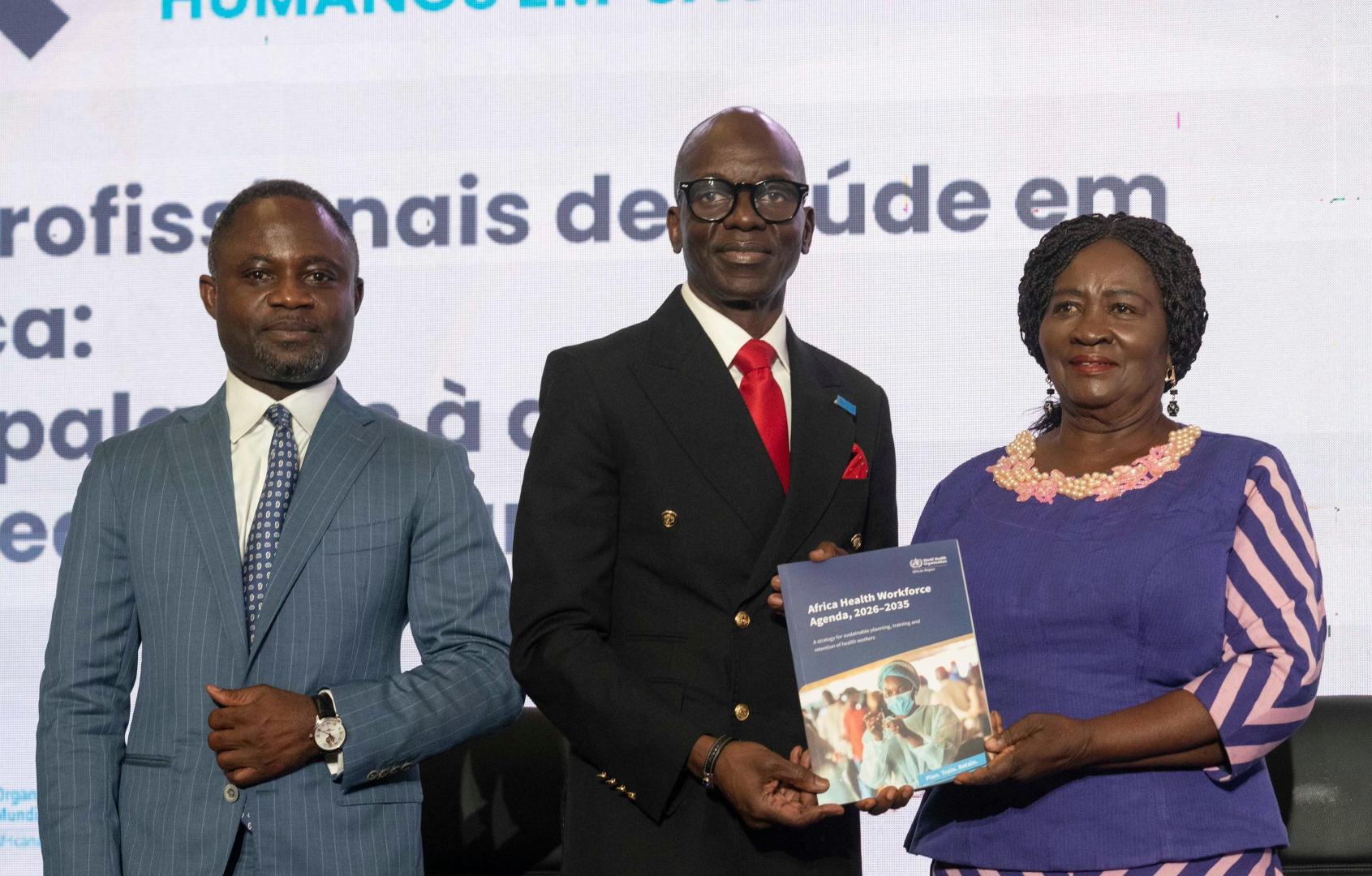
Participants are expected to review progress under the Africa Health Workforce Investment Charter and mobilize new commitments to accelerate reforms and financing. The forum will also introduce the Africa Health Workforce Agenda 2026–2035, a new regional strategy to drive coordinated action to plan, train and retain health workers at scale.
Distributed by African Media Agency (AMA) on behalf of World Health Organisation.
The post Africa’s health workforce expands but shortages, unemployment and migration intensify: WHO report appeared first on African Media Agency.