

Washington, USA, 27 March 2026 -/African Media Agency (AMA)/- When you think about sub-Saharan Africa, and about the young women who live across the region, what comes to mind? Many are mothers. Many are tireless workers. Many are the emotional and practical backbone of their households and communities.
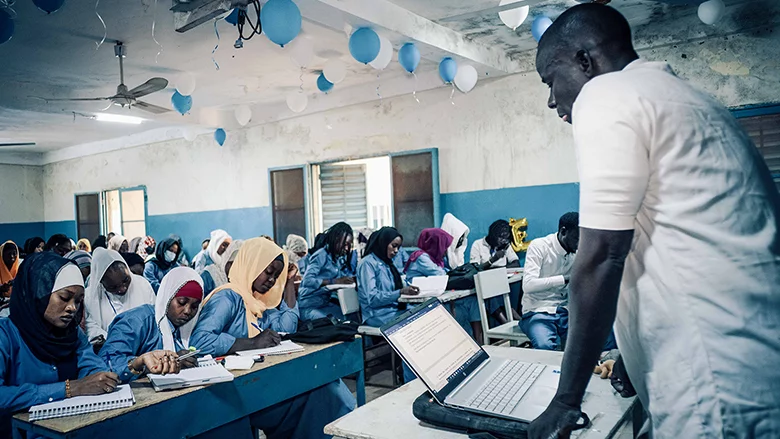
But the picture is also changing. Increasingly, more young women are finishing high school, enrolling in university, getting better jobs, and building careers beyond the home. This has not always been the dominant narrative in West and Central Africa, where even today about 40% of young women are neither in school, in training, nor employed.
Linking learning and skills opportunities with access to jobs and real economic pathways for about 3 million women
Across Western and Central Africa, the Sub-Saharan Africa Women’s Empowerment and Demographic Dividend project — known as SWEDD+ — is supporting that change of trajectory.
Building on the original regional SWEDD project launched in the Sahel in 2015, the broader SWEDD/SWEDD+ initiative has reached nearly 3 million women and adolescent girls by linking learning and skills opportunities with real economic pathways and access to maternal and child health services. About 255,000 of these women have gained practical skills and entered the workforce with confidence through the program’s economic empowerment activities. SWEDD+ is expanding the participation and leadership of women and girls while also strengthening institutional capacity for equal rights for women across the region.
Women’s individual stories, spanning fields from skilled trades to healthcare to entrepreneurship, show what becomes possible when talent meets access to opportunity.
“Now we’re motivated and earning money to support our families. We’re happy to bring solar energy to the villages.” Angelique ,Benin.
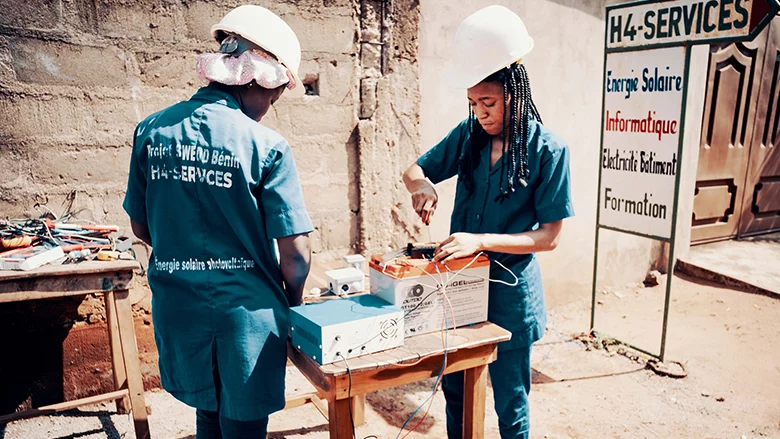
Angelique and Odette, from Benin, left school in fifth and fourth grade when their families could no longer afford the fees. Today, their path looks very different. Thanks to SWEDD, both young women got trainings in a non-traditional economic activity: building electrification and solar photovoltaic installation. They now have a better job and have been working for over two years with a private company installing solar panels. The pride in their voices is unmistakable. “Now we’re motivated and earning money to support our families,” Angelique says. “We’re happy to bring solar energy to the villages.”
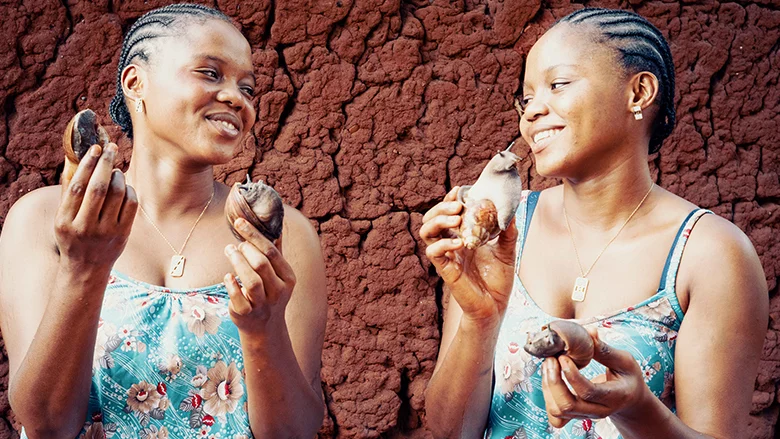
Leaving school because of financial hardship is still a common reality across West and Central Africa. Harmelle, also from Benin, had to leave school at age 14. She married soon after and became a mother, but two years later her husband died, leaving her in a precarious financial situation. A turning point came when she and her twin sister enrolled in a SWEDD entrepreneurship program that provided training and a starter kit for snail farming. With it came something just as important: peace of mind. “When I started farming, there were some difficulties,” she recalls, “but then we began earning money, and everyone was better off.”
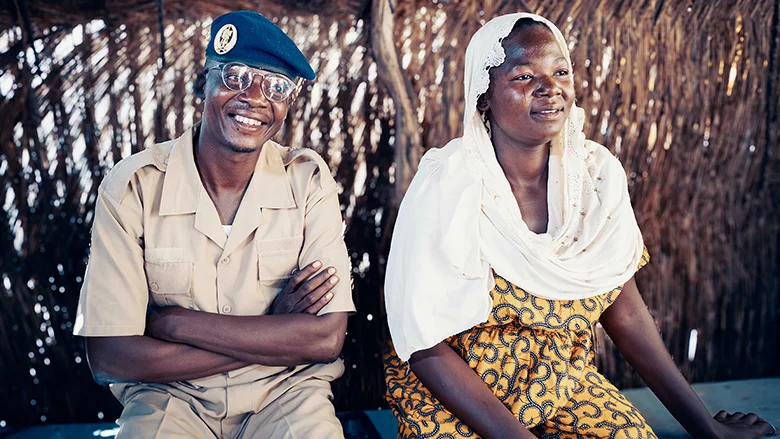
In Chad, Djogoita was inspired by her father, a police officer, to find her own way to serve her community. She chose midwifery and the role has given her both purpose and confidence. “When they bring me a pregnant woman or a child from 0 to 14 years old, I can use the knowledge I gained through my training to help them,” she explains with a great satisfaction of having a fulfilling job.
Investing in women: one of the smartest economic bets to powering local economies
Across Western and Central Africa, the transformation is underway. With the right skills, support, and opportunities, a new generation of women and girls is not only increasing their own economic independence: they are powering local economies and investing back into their families and communities. The lesson is clear: when young women are given the tools to succeed, the returns reach far beyond the individual. Investing in women and girls is not just the right thing to do; it is one of the smartest economic bets West and Central Africa can make.
Creating more and better jobs across the region is central to the World Bank Group’s mission. By equipping young women with relevant skills and connecting them to real economic opportunities, programs like SWEDD/SWEDD+ directly advance this agenda — turning human potential into productive employment that fuels inclusive and sustainable growth.
In this International Women’s month, the stories of Angelique, Odette, Harmelle, and Djogoita remind us that the future of the region’s growth and resilience is already taking shape: one young woman at a time, trained, employed, and empowered to drive change in her community.
Distributed by African Media Agency (AMA) on behalf of Word Bank Group.
The post From potential to skills and real jobs: how young women are powering change in Western and Central Africa appeared first on African Media Agency.