

Photo: Helena Hwang, World Bank
Washington, USA, 29 June 2026 -/African Media Agency (AMA)/- Before sunrise, many women in conflict-affected Ethiopia have already begun hours of unpaid work.
Some walk long distances to collect water. Others gather firewood, prepare food, care for children, or tend to elderly relatives. By the time income-generating activities become possible, much of the day is already gone.
When teams working under the World Bank-financed Response-Recovery-Resilience for Conflict-Affected Communities in Ethiopia (3R4CACE) project began studying how to support women’s economic recovery, the initial questions seemed straightforward. Which livelihoods are profitable? Which sectors are growing? Where is demand strongest? What enabling services will women need to access these livelihood opportunities?
In regions like Afar, Amhara, Benishangul-Gumuz, Oromia, and Tigray, conflict has intensified those pressures. Millions have been displaced. Gender-based violence (GBV) has surged. Markets have been disrupted, assets lost, and livelihoods uprooted. Yet across these communities, women continue searching for ways to rebuild. One key question came up that connected all the others: how do you recover and rebuild when you have lost so much to conflict?
The Hidden Barrier: Time
Survey data from Ethiopia shows women spend significantly more time than men on unpaid domestic labor. When researchers asked women what kind of work they wanted, many gave the same answer: “I need something I can do from home.”
The response reflected practical constraints rather than limited ambition. Many women were caring for children alone. Some faced mobility and safety risks linked to ongoing insecurity. Others lacked transportation or support networks after displacement. That changed how the project approached livelihoods programming.
Rather than ask only what was profitable, the market analysis examined what was realistic under the conditions women were actually living in. The study, conducted with Ethiopian firm MAE Consulting, looked at customer demand and profitability as well as safety risks, climate resilience, access to inputs, and sustainability.
Across regions, certain sectors consistently emerged as promising: livestock production, agriculture, food preparation, and small-scale processing. But the details varied depending on location. The findings of Ethiopia’s 3R4CACE project on women’s livelihoods reinforced a broad lesson: there is no one-size-fits-all model for rebuilding economic independence after conflict.
Striking Gaps in Women’s Ownership of Assets
Another pattern emerged from the Ethiopia Socio-Economic Panel Survey: women owned very few productive assets. Even tools commonly associated with women’s work—e.g., sewing machines, weaving equipment, and food-processing tools—were often controlled by men. The same was true for bicycles, agricultural equipment, and livestock assets.
Without assets, women struggle to access credit, making it difficult to invest and deepening economic dependence. For GBV survivors and displaced women, that vulnerability can become even more acute. This reinforces why the project emphasizes economic reintegration packages that include the actual productive tools women need.
Why Childcare Became Part of Economic Recovery
Generously supported by a matching Early Learning Partnership grant, the 3R4CACE project is building 80 childcare centers in Ethiopia and training 1,500 women, many of whom are gender-based violence survivors, to become childcare providers. In most regions outside Addis Ababa, community-based childcare barely exists.
This does three powerful things at once.
- It frees up women’s time so they can participate in training and income-generating work.
- It creates a new, dignified wage employment pathway.
- It builds social cohesion between internally displaced people and host communities.
In regions where formal wage work is almost nonexistent for women, childcare work stands out. It’s not a side activity. It’s a structured job with national recognition, aligned with government standards.
Designing Programs Around Women’s Realities
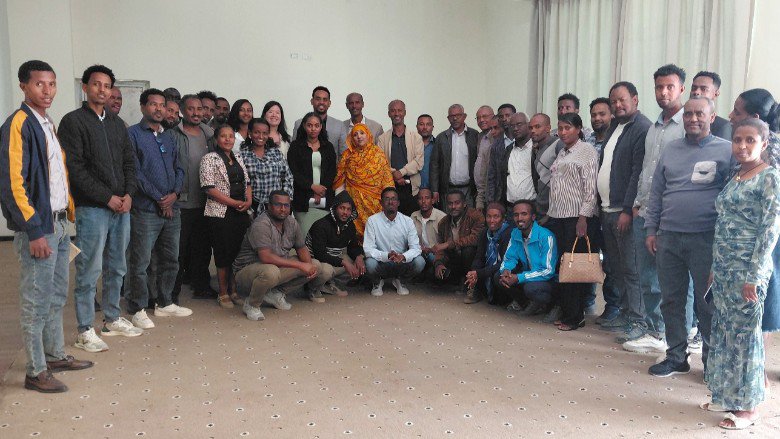
In January 2026, the Ministry of Women and Social Affairs convened regional experts for a livelihoods workshop. The conversations made clear how time burdens, lack of assets, and scarce access to childcare shape what’s realistic for women. This exchange of on-the-ground expertise led to practical menus of livelihood options.
In Benishangul-Gumuz, recommended options were agriculture, beekeeping, childcare, food processing, and livestock production. In Afar, they included beekeeping, dairy production, cooking, childcare, and livestock. In Oromia and Tigray, it was agriculture, tailoring, spice preparation, childcare, and livestock activities that emerged.
The differences reflected a central lesson from the project: livelihoods programming for conflict-affected women and GBV survivors cannot be isolated from social norms, trauma, and time poverty.
Economic empowerment is not just about income. It’s about moving out of poverty through jobs, a core focus of the World Bank’s Social Protection 500 (SP500) target. It’s about reducing vulnerability to violence and building resilience. It’s about giving a woman the ability to choose, and fostering realistic, context-specific, supported opportunities.
Distributed by African Media Agency (AMA) on behalf of Word Bank Group.
The post Supporting Women’s Economic Recovery in Conflict-Affected Ethiopia appeared first on African Media Agency.