

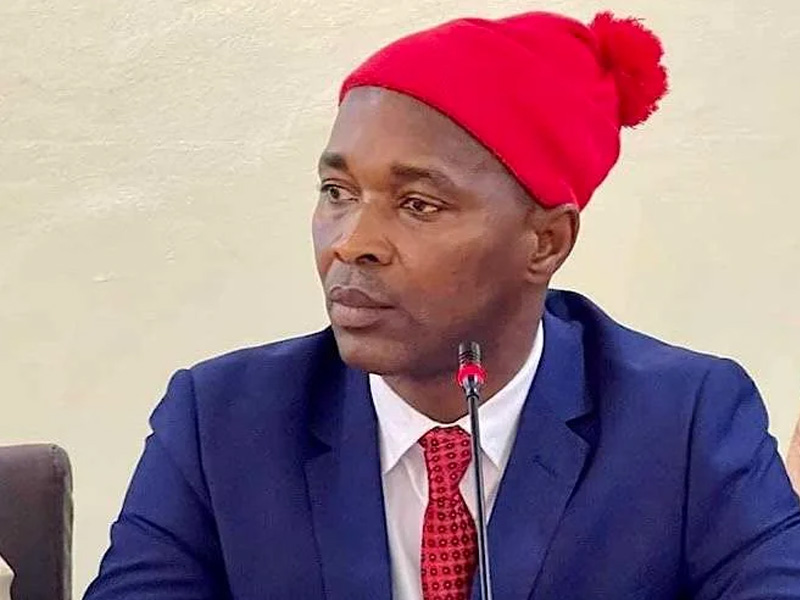
Nigeria has offered Guinea-Bissau’s opposition presidential candidate, Fernando Dias, protection at its embassy in the capital Bissau following a military coup, the Nigerian foreign ministry said on Monday.
The offer came as leaders from the Economic Community of West African States (ECOWAS) regional bloc, led by Sierra Leone President, Julius Maada Bio, tried to persuade the military officers who seized power in Guinea-Bissau last week to stand down.
At a meeting on Monday during which tempers flared and voices were raised according to a Reuters witness, ECOWAS officials urged the soldiers to allow a proclamation of the results of the country’s disputed presidential election.
“ECOWAS … demands the restoration of constitutional order, as well as the continuation and logical conclusion of the electoral process,” Timothy Musa Kabba, Sierra Leone’s foreign minister, said after the meeting with the military leaders.
“As for Guinea-Bissau’s future, a decision will be taken during the (ECOWAS) conference of heads of state and government scheduled for December 14,” he said. ECOWAS has warned it could impose sanctions on Guinea-Bissau.
The interim president installed by military officers, Major-General Horta Inta-a, said the coup was necessary to ward off a plot by “narcotraffickers” to “capture Guinean democracy” and vowed to oversee a transition that would last one year, beginning immediately.
Dias, a 47-year-old relative political newcomer, has said he was on track to win the November 23 presidential election before the military coup in the small West African nation last week.
The opposition coalition backing Dias has denounced the coup as a desperate attempt by President Umaro Sissoco Embalo and his supporters to block the proclamation of election results that would have confirmed Embalo’s defeat.
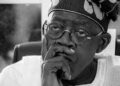
In a statement dated November 30, Nigeria’s foreign ministry said that President Bola Tinubu had approved a request for protection of Dias in response to imminent threats to his life. It also asked the ECOWAS stabilisation force to deploy its troops in the country to keep Dias safe.
Guinea-Bissau’s military rulers have banned protests and strikes as they tightened control on power, a Reuters report said.
The military government, which seized power in what some West African leaders have termed a “sham” coup, announced late on Sunday that all demonstrations, strikes and activities regarded as threats to peace and stability were prohibited.
The announcement followed protests in Bissau on Saturday where hundreds, primarily youths, demanded the release of detained opposition leaders and the publication of presidential election results.
The coup reflects a continued pattern of instability in Guinea-Bissau, a major cocaine transport hub with a long history of military interventions in politics.
Meanwhile, a delegation from ECOWAS has visited Guinea-Bissau for mediation talks with leaders of last week’s coup, as regional pressure mounts on the military leaders who seized power after a disputed election.
The mission, led by ECOWAS chairman and Sierra Leone’s President, Bio, came to Guinea-Bissau on Monday to urge the military authorities for a “complete restoration of constitutional order.”
“We’ve had today very fruitful discussions,” said Sierra Leone’s Foreign Minister Timothy Musa Kabba. “Both sides have expressed their different concerns.”
Joao Bernardo Vieira, the newly appointed foreign minister of Guinea-Bissau, said it was “very clearly established” that ECOWAS would not leave the country “during this difficult period.” “The transitional authorities and the military will continue their discussions,” he said.
The coup unfolded three days after the country’s closely contested presidential election, with both main contenders incumbent President Umaro Sissoco Embalo and opposition candidate Fernando Dias da Costa claiming victory before provisional results were due to be announced. No results have been released since.
During the takeover, Embalo told French media by phone that he had been deposed and arrested. He has since fled to Brazzaville, the capital of the Republic of Congo.
Guinea-Bissau military officials appointed former army chief of staff General Horta Inta-A to lead a one-year transition government. On Saturday, Inta-a named a new 28-member cabinet, made up largely of figures allied with the deposed president.
Separately, the main opposition African Independence Party for Guinea and Cape Verde (PAIGC) said in a statement that its headquarters had been “illegally invaded by heavily armed militia groups” in the capital.
The party had been barred from presenting a presidential candidate in the November 23 election, a move criticised by civil rights groups as part of a wider clampdown on dissent.
ECOWAS, widely seen as West Africa’s leading political and regional authority with 15 member states, responded to the coup by suspending Guinea-Bissau from all its decision-making bodies “until the restoration of full and effective constitutional order in the country”.
International condemnation has continued to grow, with United Nations Secretary-General Antonio Guterres saying that he is gravely concerned and condemning the military takeover, warning that ignoring “the will of the people who peacefully cast their vote during the November 23 general elections constitutes an unacceptable violation of democratic principles”.
Guterres called for the “immediate and unconditional restoration of constitutional order” and the release of all detained officials, including electoral authorities and opposition figures.