

Nigeria is at risk of walking into a debt trap as the country spends an increasing amount of its revenues servicing rising debts.
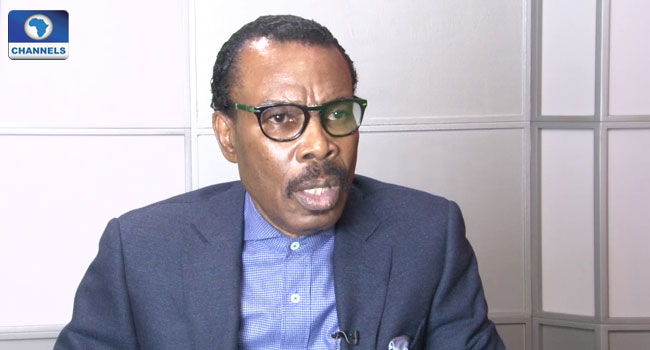
“Half of government revenue is being used to service debt, as the pace of debt accumulation is rising faster than revenue growth and GDP. In 2012, just 14 cents of every dollar earned was used to service debt, but 69 cents of every oil dollar today is being used to service debt. Currently, 25 percent of the of the budget goes to debt servicing and another 40 percent of FG revenue goes to debt” said Bismarck Rewane, Chief Executive Officer, Financial Derivatives Company.
A debt trap is a situation in which an entity borrows money but does not have enough money to make the interest payments on the loan, so it takes out another loan, with its own interest payments to cover the first loan’s payments and is likely have to borrow again to pay off the second loan, creating a cascading and crippling cycle.
“Half of government revenue is being used to service debt, while the pace of debt accumulation is rising faster than revenue growth and GDP growth” said Rewane.
Kemi Adeosun, Finance Minister, admitted last week that ten months into the 2016 financial year, the Federal Government has already reached the N900billion planned local borrowing limit for 2016. Now it is looking to external sources to fund the remaining N900 billion of the N1.8 trillion borrowing plan for the 2016 budget.
President Muhammadu Buhari budgeted N1.361 trillion for debt servicing this year as against N953.6 billion proposed in 2015, a 43 per cent increase. The new $30 billion borrowing plan is expected to raise the debt service burden further.
The country’s debt servicing obligations as a percentage of total budget has risen from 6.86% in 2010 to 22.47% in 2016. Similarly, external debts to exports ratio has increased from 14.3% in 2010 to 69.1% in 2016 while debt service as a percentage of revenue has risen from 10.58% to 35.32% within the same period.
In value terms, actual naira paid out as debt service has more than tripled from N354.13 billion in 2012 to N1.36 trillion currently, an indication of the rising debt service burden facing the nation.
“Nigeria may be approaching a debt trap. Debt to Exports ratio is at risky levels,” according to Rewane, in the latest Lagos Business School Breakfast Meeting note.
“The budget relies exclusively on borrowing for fiscal stimulus in the absence of private capital strategy. Debt service is already over 25% of budget and up to 40% of government revenue. The big gap in policy is the absence of a strategy to leverage and optimise private capital,” says Opeyemi Agbaje of TRC Advisory Services Limited.
Figures from the Debt Management Office (DMO) show that the country’s total debt as at June 30, 2016 was $61.4 billion or N16.3 trillion, which means the planned $30 billion will take the country’s total debt stock to $91.4 billion, or approximately N28 trillion, excluding contingents.
Though the DMO 2015 debt sustainability analysis concludes that the country’s debt portfolio is “at a very low risk of distress.” However, the DMO also admitted that “the increase in the country’s GDP is not accompanied by a proportionate increase in exports and revenue, thereby making the debt portfolio susceptible to both indicators.”
The DMO noted that the trend indicates “the need to diversify, as well as increase the revenue base of the country, in order to mitigate the risk of debt distress in the long-term.”