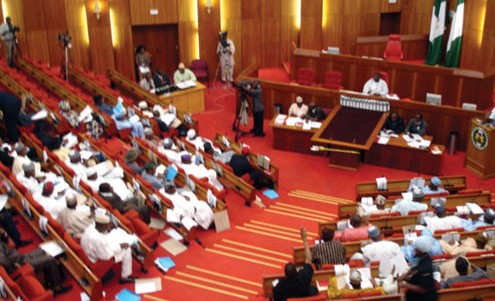


 Senate aims to pass a long-delayed bill to overhaul the oil sector by the end of July, Senate President Bukola Saraki told Reuters.
The Petroleum Industry Bill (PIB), which aims to improve transparency, attract investors and stimulate growth, has been debated for more than a decade and was broken into sections to help it pass into law.
The PIB was discussed for some 17 years before the governance bill was passed by both houses of parliament in January.
That unprecedented move, following the decision to break up the unwieldy PIB into smaller bills, raised hopes that the other pieces of legislation could be passed soon after.
Nigeria is an OPEC member and Africa’s largest oil producer. Crude sales make up two-thirds of government revenue but the sector’s development has been held back for decades by mismanagement.
Saraki said in an interview the aim was to ensure all three remaining parts of the legislation were passed by the National Assembly before it went on holiday in July.
“We go on the summer break in July. If we don’t pass it by July, by the time we come back in September it is all going to be elections,” said Saraki, referring to presidential and legislative polls scheduled to take place early next year. He said the break would begin in the third week of July.
Any bills passed by lawmakers would have to be signed into law by President Muhammadu Buhari.
The governance bill, passed in January, is awaiting Buhari’s approval.
The other three parts — the fiscal, administrative and host community bills — are yet to be passed. Saraki said the bills would be discussed at a public hearing between the first and third weeks of May before being returned to lawmakers.
“We are working on all three at the same time. The three should go at the same time,” said Saraki on Tuesday, when asked about the order in which the bills would be passed.
POLICY CHALLENGES
Antony Goldman, of Nigeria-focused PM Consulting, said “huge logistical and policy challenges” would have to be resolved for the legislation to be passed by the end of July.
“If they could get it done, it would be a very significant achievement,” said Goldman. “If they fail, risk increases that the whole process might stall until well after the next elections.”
Growth remains weak in Nigeria’s economy as it continues to emerge from its 2016 recession, the country’s first full-year contraction in 25 years. The recession was largely caused by low crude prices and militant attacks on energy facilities.
With economic growth still slow, there have been calls for parliament to complete its work on the record 8.6 trillion naira ($27.39 billion) budget that was presented to the legislature by Buhari in November.
Any changes made by lawmakers must be sent back to Buhari for approval. The central bank governor last month urged the swift passage of the budget to bolster the economy since it would enable the government to implement its spending plan. ]
“It should be laid probably end of this week, latest Tuesday, and hopefully passed on Wednesday,” Saraki said of the budget, during the interview in the National Assembly in the capital, Abuja.
He said the delay in passing the spending plan was largely due to a number of ministries and government agencies providing incomplete information.
Delays in passing budgets, amid wrangling between the executive and legislature, are common in Nigeria and hindered the implementation of Buhari’s previous spending plans.