

*Keystone, Polaris, Union Yet To Recapitalise, 7 Months After Deadline, Miss N200bn Threshold
John Danjuma Omachonu
As global regulators from Washington to London intensify surveillance of artificial intelligence risks to financial stability, Nigeria faces a more old-fashioned stability question: what to do with three banks that have been under Central Bank of Nigeria administration for 33 months and failed to meet the March 31, 2026 recapitalisation deadline.
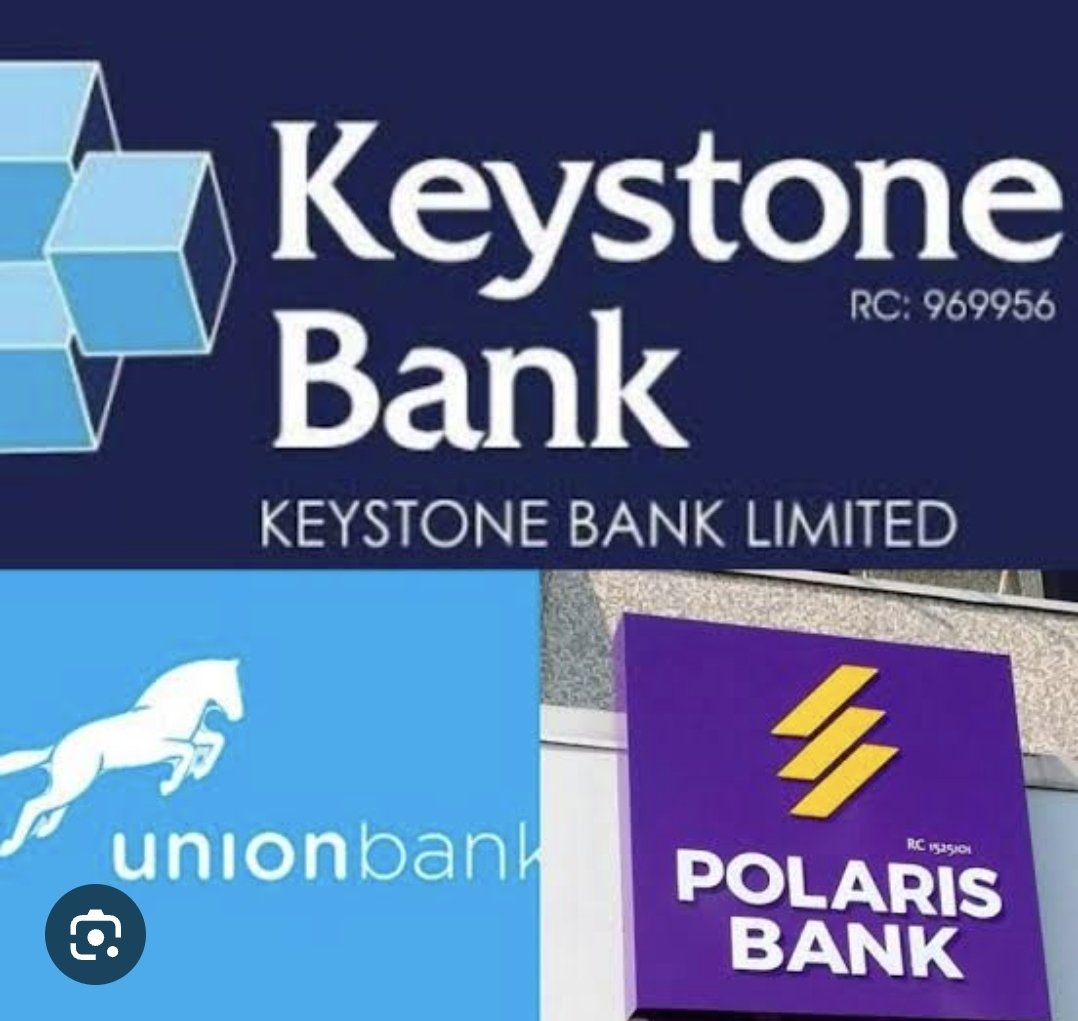
Keystone, Polaris and Union Banks, which have been under the management of CBN since January 10, 2024 following the federal government Special Investigator report into alleged proxy acquisitions by former CBN Governor Godwin Emefiele, remain fully operational but collectively said to be some billions of naira short of the N200 billion national licence threshold.
33 other banks raised about N4.65 trillion, during the recapitalisation exercise adjudged successful by both local and international analysts.
The success of the exercise has continued to bolster the economy as well as atteacting international investors.
For instance, it has increased the revenue of the nation’s thriving capital market.
Combining the development with its internal reengineering based on high corporate governance standards, the NGX has been on course ocassioned
by a record year nine-month revenue rising 80% to N27.3 billion, while pre-tax profit climbed 83% to N20.6 billion, already surpassing the full-year 2025 figure.
JPMorgan has commenced moves through the granting of approval-in-principle by CBN to establish a licensed banking operation in Nigeria as authorities pursue reforms aimed at strengthening financial stability, restoring investor confidence and attracting foreign capital after years of currency volatility and policy uncertainty.
CBN had said then that the three banks could not meet the set new minimum of N500bn international, N200bn national, N50bn regional, March 31, 2026 deadline, due the ongoing regulatory and judicial processes.
Consequently, the regulator gave 3-week extension end of March, then saying that “allowances tied to judicial and regulatory processes.”
It added that the banks are “safe, healthy, strong, resilient” but monitoring closely. President Bola Tinubu praised Yemo Cardoso for the success of the reforms, while singling out, the management of the three banks.
READ ALSO:Senior US General Fired, Accused Of Leaking classified Information
However, some analysts say market reality may not favour them as seven months after deadline, still not recapitalised, not sold to new investors, not merged.
Metrobusinessnews.com gathered that the options on the table include, downgrade to regional licence of N50bn or merge, but that the banks are favourably disposed to ‘standalone options.’
But the analysts say time is of the essence for the ‘orphan banks’, that moving into 2027 election year with issues unresolved may not augur well for the lenders as confidence continues to reduce.
On October 13, the IMF’s Global Financial Stability Report, launched at the IMF-World Bank Annual Meetings in Bangkok, warned of three salient near-term catalysts for market turmoil: an AI-driven market correction, a disorderly spike in sovereign bond yields, and severe cyber incidents. 138f
On the same day, Reuters reported that the US Federal Reserve, Office of the Comptroller of the Currency (OCC) and Federal Deposit Insurance Corporation (FDIC) have been writing to large, mid-size and small banks asking how they limit, audit and shut down agentic AI, autonomous AI agents that accomplish tasks with minimal human supervision in cybersecurity and threat response.
The Positions Of The Banks:
CBN’s own narrative has shifted from deadline to extension, and on, particularly after the other 33 banks raised about N4.65 trillion.
In the same statement, it noted “a limited number of institutions remain subject to ongoing regulatory and judicial processes.” Those are Polaris, Keystone and Union.
In June, it granted a three-week special regulatory window for the three lenders to finalise capital plans due to “unique legal and regulatory challenges.”
Seven months after the deadline, there is still no new investor, no merger, no sale.
Polaris Bank: Created Sept 21, 2018 to assume defunct Skye Bank. Sold in Oct 2022 to Strategic Capital Investment Ltd for N50bn upfront plus assumption of N1.305trn AMCON debt over 25 years. House of Reps alleged a higher bid was rejected. Under CBN admin since Jan 2024.
Keystone Bank: Most advanced legally. On Feb 11, 2025, Federal High Court Ikeja ordered forfeiture of shares held by Sigma Golf to the Federal Government — now 100% FG-owned. Competing investor interest includes a local consortium seeking preferred bidder, but market doubts local capacity without foreign partner.
Union Bank: ‘Acquired’ June 2022 by Titan Trust Bank. On March 25, 2026, Federal High Court Lagos voided CBN’s sack of board and management — Union won against CBN. CBN appealed. Ownership in limbo. Prospective foreign interest from UAE reported, but TGI Group legal dispute lingers.
CBN Director Banking Supervision Dr Olubukola Akinwunmi told Arise News in April: “These banks have the capacity to raise the required capital… Nigerians are free to transact… They don’t need to panic.”
The International Connection:
With the sentiment shifting to the time factor as against the capacity, the double systemic risk may have emerged as this is where the global AI story meets Nigeria’s unfinished recapitalisation.
The IMF GFSR 2026 examined 14 disclosed transactions and found hyperscalers have channelled, $300bn in equity into AI firms, plus $650bn in debt, in exchange for $1.4trn in future revenue commitments through data-center contracts and compute purchases.
According to the Fund, should AI monetisation disappoints, equity falls, debt cannot be serviced, and revenue promises fail, and that will mean a “triple whammy.”
It also found that in over 70% of cyber cases in 2026, vendors had almost no time to patch vulnerabilities before exploitation, up 20 points from 2025, and AI is making attacks more sophisticated.
US/EU Regulatory response:
Worried by the development, the OCC, Fed and FDIC are asking serious questions: what limits are placed on agents, how actions are monitored and approved, whether decisions can be audited, can you prevent agents exceeding authority, and do you have a kill-switch?
Crucially, in April 2026, US agencies revised model risk guidance (SR 26-2 / OCC Bulletin 2026-13) and explicitly excluded generative and agentic AI from scope, calling them “novel and rapidly evolving.” That created a governance gap they are now scrambling to close.
In Europe, ECB gave significant institutions until end-October 2026 to submit plans against AI-enabled cyber threats. On October 15, the Financial Stability Board finalised 12 sound practices for responsible AI adoption. c2a2
Why The Scrutiny Borders Nigeria’s Three Banks, Fears
The three banks run legacy core banking systems, under CBN appointed management, understandably, undercapitalised, and possibly unable to invest.
The fears in the industry are that, with the recapitalised banks burdened by regulatory and environmental challenges, whether the uncapitalised ones will have the muscles to maintain an AI agent inventory, audit trail and human-in-loop, test kill-switch and recovery ECB’s “switch off and restart in controlled manner” test.
Other potential challenges include ability to map third-party AI supply chain, including Chinese models for which Reuters flagged as well as funding the cyber workforce, for which IMF says global sector needs 40% more professionals.
However, the CBN’s Payment System Vision 2028 committee includes NCC, NDIC, SEC, but analysts insist that, vision without capital is at best an aspiration.
Implications:
The analysts observe that, though the percentage of the banks’ deposits held might not be much, extending the resolutions to 2027 elections year may further dwindle confidence with the possible attendant rumour-driven withdrawals.
The analysts alse see moral question as Keystone, for instance is now FG-owned. Recapitalising it from FAAC or AMCON is quasi-fiscal at a time banks already raised N4.65trn from a market now exhausted.
Besides, with revenue challenges, the federal government may not be favourably disposed to using public funds.
More worrisome, they further argue, is the issue of credit. According to them, banks under the management of the regulator cannot lend aggressively.
With CRR at 45% and MPR 27.5%, interest rate hovering between 30 and 35 percent, with the attendant downturn in manufacturing activities, the economy would need banks that can lend, not banks under watch.
“33 banks raised capital… who will bring about N350bn+ for three banks with legal baggage and potential downgrade to regional licence (N50bn threshold)?
CBN sources say banks prefer “standalone options” and resist mergers. “But standalone requires clean title, which Union does not have while CBN appeal is pending,” says retired Banker
Possible Implications Of Licence Downgrade
If the three banks fail to meet N200bn national licence and opt for regional licence of N50bn, their customers may experience some restrictions in businesses as branches outside the regions must be closed or be sold. This is because regional licence allows banking only in 6-12 states, not nationally. Salary accounts, trade facilities outside zone must migrate.
The banks’ deposits would remain insured by the NDIC and the lenders will have the latitude to create impressions witbin their areas of operations.
Interestingly, operations will continue, but product scope shrinks and since they cannot operate internationally, limited foreign trade services and correspondent banking are cut.
CBN says banks remain “safe, healthy, strong, resilient” and fully operational as downgrade would be supervisory tool, not a failure declaration.
However, market watchers say the risk is not in licence change, but the delay as 33 months of administration without finality is itself a stability risk, lending credence to IMF postulation that, ‘complacency is dangerous.’