


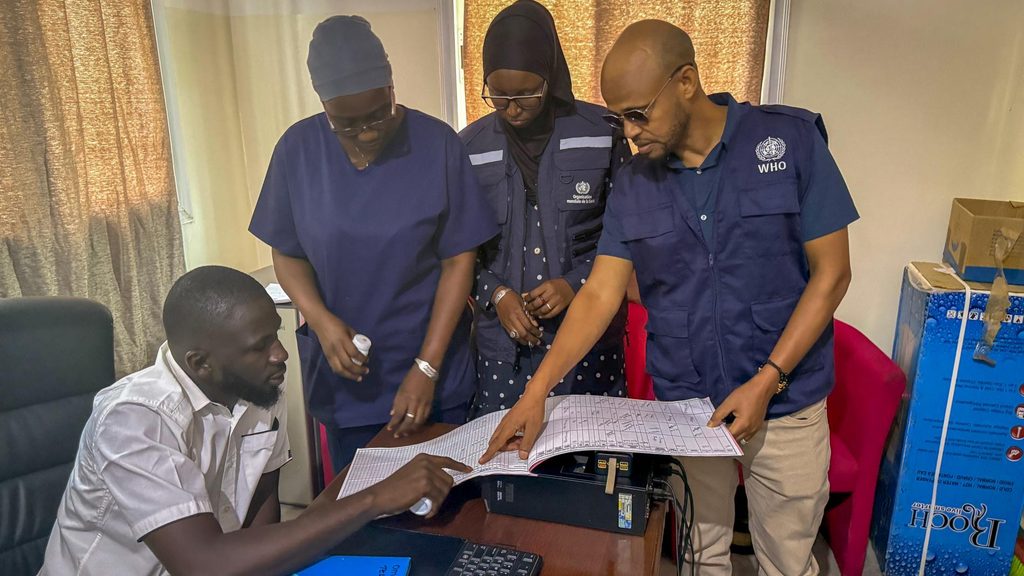
Geneva, Switzerland, 09 July 2026- /African Media Agency (AMA)/ – In The Gambia, a visit to the clinic for HIV services is no longer just one step in a long process: clients now experience bespoke, integrated delivery of care. At the heart of this shift is differentiated service delivery, led by the Ministry of Health with support from the World Health Organization (WHO).
Around 30% of people in The Gambia who test HIV-positive do not start treatment immediately, often because services are too far, fragmented or difficult to navigate when they are needed most. Differentiated service delivery aims to remove these barriers and tailor services to meet the needs of individual health clients.
In The Gambia, around 25 000 people are living with HIV and more than two-thirds know their status. Among people diagnosed, around 70% are on antiretroviral treatment and almost 55% have achieved viral suppression.
Historically, HIV prevention and treatment in The Gambia was focused on prevention of mother-to-child transmission (PMTCT) of HIV. Now, to expand testing and treatment services to more people living with HIV, services are integrated into 77 health facilities as broader entry points into care.
To expand quality of care, the Ministry of Health, in partnership with WHO and UNAIDS, conducted a three-day training for 60 health workers and lay counsellors on differentiated service delivery in May 2026. The training focused on the service delivery model, community delivery of HIV treatment, adherence support, viral load monitoring and stigma reduction.
This has helped health facilities offer more flexible, client-centred services, including improved counselling, multi-month dispensing of HIV treatment and better use of patient data. The changes have enabled tailored care, fewer missed appointments and stronger continuity of treatment. Clinics are less congested, with smoother patient flow and reduced waiting times, creating a more supportive environment that encourages health-seeking behaviour. Flexible service hours, including weekends and extended clinics, also help clients remain in care without disrupting daily life.
“What used to require separate visits have now been integrated into routine services,” says Omar Dampha, officer in charge at Brufut Health Centre in Kombo North, West Coast Region of The Gambia. “This has made care more discreet, more convenient and easier to navigate.” He adds that clients no longer need additional trips just for treatment, reducing transport costs and helping those living far away to remain in care. “So far, we have recorded no treatment defaulters among enrolled clients,” he says.
At the health centre, differentiated service delivery was introduced in October 2025. By May 2026, 15 clients had been enrolled under the model.
According to senior nursing officer at Brufut Health Centre, Binta Jallow, the change is reflected in service delivery: “Now care is organized so that clients receive counselling and treatment on one visit,” she says, noting that this has made the process smoother and reduced repeated visits for both clients and health workers.
Health care officer at the health centre, Rohey Sarr, sees the change in how clients experience these services: “When clients feel their privacy is respected and they are treated with dignity, they are more willing to return and continue treatment,” she explains.
Between October 2025 and March 2026, more than 1000 people in The Gambia started HIV treatment through this approach. Of these, 85% were initiating treatment for the first time and the rest were mothers enrolled through PMTCT services.
“When HIV services are designed around the needs of people rather than the needs of the system, barriers to care begin to disappear,” says Dr Nathan Bakyaita, WHO Representative in The Gambia. “Differentiated service delivery is helping clients access treatment with greater dignity, convenience and continuity, ultimately improving their quality of life.”
Distributed by African Media Agency (AMA) on behalf of World Health Organisation.
The post Bringing HIV care closer to people in The Gambia appeared first on African Media Agency.