


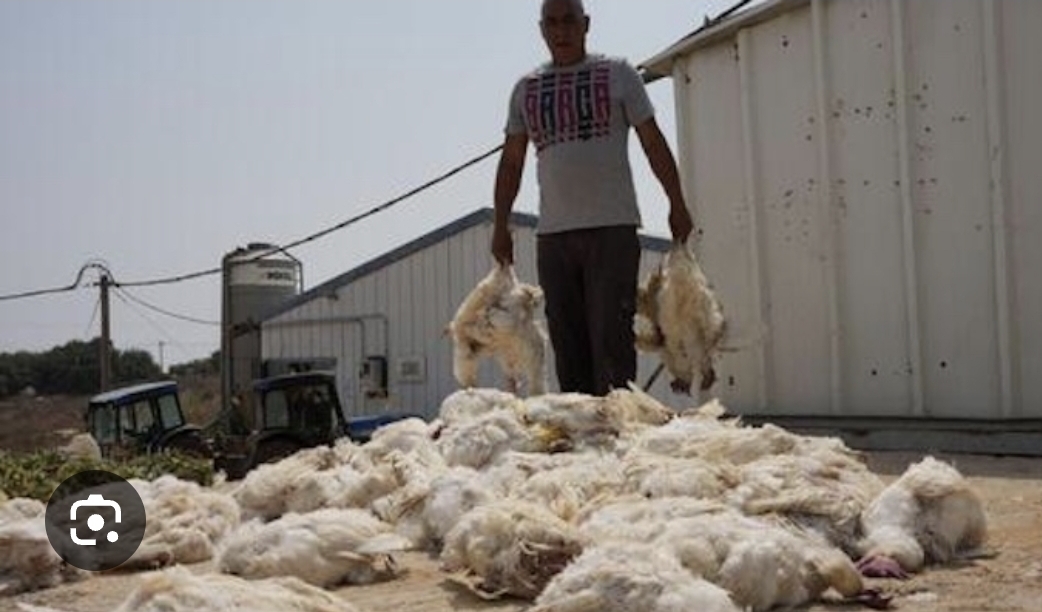
Hundreds of thousands of poultry have died in France as a severe heatwave continues to grip large parts of Western Europe, placing mounting pressure on farmers and animal carcass collection services.
Agricultural organisations said the scale of the losses has become so significant that authorities are considering allowing on-farm burials in France’s two largest poultry-producing regions.
The deaths come amid record-breaking temperatures across Western Europe, where the intense heat has been linked to dozens of deaths, school closures, power disruptions and widespread disruption to farming activities.
France recorded temperatures of 44.3 degrees Celsius on Tuesday, with forecasts indicating that extreme conditions could persist in the coming days.
Yann Nedelec, head of French poultry industry group ANVOL, said unusually high poultry mortality had been recorded in the country’s leading poultry-producing areas.
“In our two largest poultry-producing regions, we are seeing excess mortality due to the heat,” Nedelec said.
He noted that both indoor and outdoor poultry farms had been affected and estimated that at least several hundred thousand birds had died, although a final figure was not yet available.
READ ALSO:LPPC Suspends Mike Ozekhome From SAN Rank
France is the European Union’s third-largest poultry producer after Poland and Spain.
The Brittany and Pays de la Loire regions account for nearly 60 percent of the country’s poultry population and have been among the hardest hit by the heatwave.
Agricultural authorities in both regions have warned of what they described as massive poultry losses.
The situation has also created logistical challenges, as the volume of dead birds has exceeded the capacity of normal carcass collection services.
Under normal circumstances, dead farm animals are transported to rendering facilities for disposal.
However, agricultural bodies said the current scale of mortality has overwhelmed the system, forcing authorities to explore alternative solutions.
Farmers awaiting collection or approval for burial have been advised to use sawdust or wood shavings to absorb fluids from carcasses and reduce environmental risks.
Officials said any on-farm burial would be subject to technical and environmental assessments before approval is granted.
According to FranceAgriMer, a typical poultry house in France contains around 20,000 birds, while most poultry farms operate an average of two poultry houses.