

Oil prices rose by about 3% on Tuesday, clawing back some of the previous session’s losses as Iranian attacks on the United Arab Emirates rekindled supply fears while the Strait of Hormuz remains largely shut.
Consequently, Brent crude futures jumped by $3.27, or 3.3%, to $103.48 a barrel by 1028 GMT while U.S. West Texas Intermediate (WTI) crude gained $3.14, or 3.4%, to $96.64.
In the previous session, Brent settled 2.8% down while U.S. WTI lost 5.3% after some vessels sailed through the critical Strait of Hormuz waterway.
The U.S.-Israeli war on Iran is in its third week with no end in sight.
Iran renewed attacks on the United Arab Emirates. Operations at the Shah gas field remained suspended after a drone attack while a fresh attack caused a fire at Fujairah port, where loading by state oil company ADNOC has been halted.
Fujairah, located on the Gulf of Oman just outside the Strait of Hormuz, is a critical exit point for oil volumes equivalent to roughly 1% of global demand.
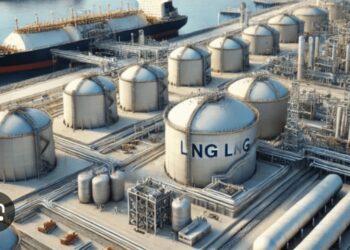
Meanwhile, the disruption to shipping through the Strait of Hormuz – a vital gateway for about 20% of the world’s oil and liquefied natural gas trade – has raised concerns about supply shortages, higher energy costs and rising inflation.
“The risks remain stark: It only takes one Iranian militia to fire a missile or plant a mine on a passing tanker to reignite the entire situation,” IG market analyst Tony Sycamore said in a note.
Several U.S. allies rebuffed Donald Trump’s call on Monday to send warships to escort shipping through the strait, drawing criticism from the U.S. president, who accused Western partners of ingratitude after decades of support.
“For now, oil markets are fixated on the duration of the conflict, halted supplies at Hormuz and eventually the damage this chaos will leave on oil infrastructure in the Gulf,” said Phillip Nova analyst Priyanka Sachdeva.
Iran has allowed some Indian vessels to sail through the Strait of Hormuz, which eased some concerns on Monday, though traders still expect severe disruption, investment bank Cavendish said in a note.
Middle East crude benchmarks have soared to record highs, becoming the world’s most expensive oil, with traders blaming the price spike on reduced supply available for delivery.
READ ALSO:Diesel Prices Cross $5 Per Galon, Second Time Ever In US As Middle East War Tests Global Economy
The effective closure of the strait has forced the United Arab Emirates, the Organization of the Petroleum Exporting Countries’ third-largest producer, to reduce its output by more than half, two sources told Reuters.
Oil prices still have the potential to be higher by the end of March, with technical analysis showing WTI’s medium-term resistance at $124 a barrel, said OANDA analyst Kelvin Wong.
To curb rising energy costs, the head of the International Energy Agency suggested member countries could release more oil, in addition to the 400 million barrels they have already agreed to draw from strategic reserves.
Cost of living in Nigeria, typified by high transport fares, prices of food items, among others have continued to rise in response to the markets rhythm by Dangote Refinery, which last week reviewed prices about three times within a week.
“Any moment from now, the refinery will announce a new pump price. This is even as the federal government has continued to maintain ‘silence of the graveyard’ in the face of this excruciating hardship by the citizens.