


The current economic situation in Nigeria is precarious, with high liquidity in the economy, but high level of poverty and hardship, fueling illicit financial flows, which in turn may be threatening the country’s fiscal stability, foreign reserves, and overall economic well-being, investigations by metrobusinessnews.com (MBN) have shown.
Specifically, the monthly FAAC Windfalls have turned toxic following massive election spending with banks as major facilitators in the illicit financial flows that are harming the Nigerian economy and its citizens.
With over four trillion naira as total FAAC disbursements to states in 7 months and other inflows, particularly for political reasons, the economy can be said to be liquid enough for the positive impact to be felt by the citizens, all things being equal.
Nigeria, Africa’s largest population, has long struggled with revenue underperformance, even as non-oil revenues remain low by global standards, and a significant portion of potential tax income is believed to be lost to illegal outflows and corruption.
Government efforts to reform tax administration and improve compliance have made some progress, but leakages persist.
Nigerians remain cautiously optimistic that the new tax reforms would engender development and bring relief to businesses and individuals.
To most Nigerians, this is, perhaps, the best time to be governor of a state in Nigeria. Each state governor receives several billions of naira as monthly allocations from Abuja.
But, while the ugly development is achieving some purpose for the professional politicians, typified by defections and high level financial impunity, but, despite these huge receipts, most Nigerian states are decrepit, and the masses are deeper in penury than they were few years ago.
The Federal Government has, since the removal of subsidy, channelled more allocations to the state governors in a manner that has now made the state chief executive officers have so much excess money as to think of building political empires and fiefdoms for themselves and families for future elections.
Consequently, amid the huge allocations, the governors have failed to allow the resources to positively impact the lives of the people in the states, through the necessary infrastructure.
Almost all the governors today are beside themselves with happiness over the bottomless pit allocations they receive regularly.
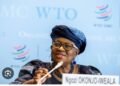
But, while they are having the best of times, the misery of the people is worsening, with most Nigerians asking ‘Where is the safety net that Ngozi Okonjo-Iweala spoke about recently? There is no net, not to mention the safe one!’, says a concerned Nigerian
In Nigeria, citizens are literally taking care of everything, from the provision of power, water, security, education, and healthcare to everything else. The question then is, what does the government at all leves, and particularly at the sub-nationals, do for the people?
READ ALSO:Why Tinubu’s Economic Reforms Failing To Deliver Expected Benefits To Citizens-Peterside
Just a few days ago, the Federation Account Allocation Committee (FAAC) shared the sum of N2 trillion among the three tiers of government and the Federal Capital Territory (FCT). The state governments received N660.349 billion. This has been the pattern since the subsidy was removed, yet the masses are languishing in penury and lamenting rising poverty.
The National Primary Health Care Development Agency (NPHCDA), recently rolled out a 10-year roadmap to significantly reduce out-of-pocket expenses and drive the attainment of Universal health coverage in Nigeria by 2030.
The federal government has approved and released N32.9 billion through the Basic Health Care Provision Fund (BHCPF) for primary healthcare delivery, marking the third round of disbursements in 2025.
Muhammad Pate, coordinating minister of Health and Social Welfare, announced this in a statement, while calling on citizens to take an active role in ensuring that the funds are used transparently and effectively.
According to Pate, the funds are aimed at strengthening primary health care delivery across the country by providing essential services, improving infrastructure, and supporting emergency treatment.
“The Government of the Federal Republic of Nigeria has approved and released N32.9 billion through the Basic Health Care Provision Fund the third round this year. This money is not sitting in Abuja; it has already begun its journey into the commercial bank accounts of primary health care facilities in every ward across Nigeria. It is your clinic’s money. It is your community’s chance. It is your country’s promise,” he charged citizens.
MBN investigations further show that, apart from Lagos and other few states, Public Health Centres are alien to many states, except small offices created in some local governments in some states, but without the required drugs.
Pate lamented that community members often fail to monitor how funds are utilised, warning that such indifference could undermine the programme’s impact.
“Too often, we have observed that communities stand aside. Our community members and institutions do not ask how the money is used, or if it reaches the people it was meant for. When that happens, silence becomes a loss,” he said.
Sadly emough, BudgIT, a civic tech non-profit organisation, says only seven states implemented more than 80 per cent of their health budgets in 2024.
This was highlighted at the BudgIT 2025 State of States Report launch, with theme “A Decade of Subnational Fiscal Analysis:” released on Tuesday in Abuja.
Indeed, the International Monetary Fund ,(IMF), recently flagged illicit flows as major threat to Nigeria’s revenue
The Fund had raised fresh concerns over illicit financial flows (IFFs) from Nigeria, warning that they are exacerbating the country’s already strained revenue position and undermining efforts to achieve fiscal sustainability.
Speaking at the recent 2025 IMF–World Bank Annual Meetings in Washington, Kristalina Georgieva, IMF Managing Director said the Fund is increasing its focus on tracing and curbing illicit flows, particularly in countries like Nigeria where revenue mobilisation remains a critical challenge.
“We believe that for countries like Nigeria, the IMF’s renewed focus on tracing illicit financial flows could provide a blueprint for plugging the fiscal leakages that have long undermined revenue generation and sustainable growth,” Georgieva said.
Illicit financial flows — which include stolen public funds, proceeds from corruption and criminal activity, and anonymous digital transactions — are costing developing economies billions of dollars annually.
In Nigeria, the problem has taken on heightened urgency as the country faces rising debt servicing costs, declining oil revenues, and limited fiscal space to fund development priorities.
Georgieva described IFFs as a global threat that is especially harmful to developing countries. “You may have money, just plainly stolen money that belongs to the taxpayers. You may have private money directed for criminal activities undermining the welfare of citizens,” she said. “Now with digital money, criminal activities can be funded without being traced. This is a serious problem, and we have to take it as such.”
While illicit flows are not new, the IMF said their nature has become more complex. A recent policy briefing from the Fund highlighted how IFFs now range from traditional embezzlement and trade misinvoicing to modern methods such as the misuse of cryptocurrencies and digital platforms for anonymous cross-border transactions. Officials noted that weak enforcement, limited oversight, and institutional gaps continue to allow such practices to thrive.
It is on record that Nigeria, Africa’s largest population, has long struggled with revenue underperformance. Non-oil revenues remain low by global standards, and a significant portion of potential tax income is believed to be lost to illegal outflows and corruption.
She emphasised that reversing the tide of illicit financial flows will require collaboration beyond government agencies. Civil society groups, financial institutions, and international partners all have roles to play in promoting transparency and accountability.
“We ask our teams to engage with civil society and non-government institutions because they often know where the vulnerabilities lie,” Georgieva said. “Working together, we can build trust and achieve more.”
The IMF praised countries like Kenya and Sri Lanka for adopting collaborative frameworks to combat financial crime and reinforce good governance, and encouraged Nigeria to continue building institutional capacity to close fiscal gaps and restore investor confidence.
Observers say that these huge allocations are responsible for heightened tension in rhe polity as.both the Governors and sycophants are struggling for the spoils of the system, blurring the true identies of democrat and progressives..
Curiously the BudgIT’s State of States report named Anambra State as the best-performing state in Nigeria’s 2025 Fiscal Performance Ranking.
Lagos, Kwara, Abia, and Edo followed in the top five, while Cross River suffered a major decline, dropping from fifth in 2024 to 30th in 2025.
At the lower end of the rankings, Imo, where the chairman of the Progressive Governors’ Forum, Hope Odidika Uzodinma governs, Kogi, where Yahaya Bello, facing corruption charges, governed for eight years, Jigawa, Benue, and Yobe occupy the bottom positions.
In a statement shared on X (formerly Twitter) on Tuesday, BudgIT described this year’s edition—titled “A Decade of Subnational Fiscal Analysis: Growth, Decline and Middling Performance”—as a milestone marking 10 years of tracking fiscal sustainability and governance transparency across Nigeria’s 36 states.
BudgIT highlighted the key movements in the 2025 rankings.
“Anambra State rose from second to first position, securing the title of the best-performing state in the federation, while Lagos maintained its second place for the second consecutive year.
“Kwara climbed from fourth to third, Edo entered the top five after consistently ranking within the top ten over the last four editions, and Abia, which had never previously featured in the top 10, now ranks fourth,” the organisation said.
Other notable movements include Akwa Ibom, which surged 17 places from 27th to 10th, and Zamfara, which moved up nine places from 26th to 17th.
The report also noted that only five states—Abia, Anambra, Kwara, Ogun, and Edo—generated enough IGR to cover at least 50% of their operating expenses, compared with six in 2024.
Infact, fourteen states now require more than five times their IGR to cover costs, up from six in 2024, underscoring persistent challenges.
The report retained five key metrics to rank all 35 states: Index A – a state’s ability to meet operating expenses using only Internally Generated Revenue (IGR); Index A1 – year-on-year IGR growth; Index B – capacity to cover all expenses and loan obligations using total revenue without borrowing; Index C – debt sustainability based on foreign debt as % of total debt, total debt as % of revenue, debt service as % of revenue, and personnel cost as % of revenue; and Index D – prioritisation of capital expenditure over recurrent spending.
On revenue performance, BudgIT noted major shifts in IGR.
“While Rivers (121.26%) and Lagos (118.39%) were the only two states with sufficient IGR to cover their operating expenses in 2024, the absence of Rivers from this year’s analysis has reshaped this dynamic.
“Lagos remains a returning champion with 120.87%, while Enugu now leads with an impressive 146.68% IGR-to-operating expense ratio,” the report said.
Only five states—Abia, Anambra, Kwara, Ogun, and Edo—generated enough IGR to cover at least 50% of their operating expenses, compared with six in 2024. Fourteen states now require more than five times their IGR to cover costs, up from six in 2024, underscoring persistent challenges.
In capital expenditure, Abia led with 77.05% of its total expenditure devoted to capital projects, followed by Anambra, Enugu, Ebonyi, and Taraba, each allocating over 70%.
Overall, 24 states spent at least half of their budgets on capital projects, while Bauchi, Ekiti, Delta, Benue, Oyo, and Ogun devoted more than 60% to personnel and overhead costs.
Total recurrent revenue for all 35 states grew from N6.6 trillion in 2022 to N8.66 trillion in 2023 and N14.4 trillion in 2024—a 66.28% increase, far surpassing the 28.95% rise between 2022 and 2023.
Lagos accounted for 13.42% (N1.93 trillion) of total revenue in 2024. Gross FAAC transfers increased by 110.74%, reaching N11.38 trillion, with states like Oyo (785.79%), Delta (708.36%), and Anambra (640.98%) recording over 600% growth between 2015 and 2024. Despite these gains, 28 states relied on FAAC for at least 55% of total revenue.
Subnational debt also saw a change. Total debt rose modestly from N9.89 trillion in 2023 to N10.57 trillion in 2024, a 6.8% increase. The top five debtor states—Lagos, Kaduna, Edo, Ogun, and Bauchi—accounted for 50.32% of total debt.
Encouragingly, 31 states reduced domestic debt by at least N10 billion, while foreign debt fell by over $200 million.
On long-term trends, BudgIT said, “Over the past decade, the State of States has evolved into Nigeria’s most authoritative subnational fiscal analysis. This 10th edition not only reflects the story of growth and imbalance but also underscores the urgent need for reform.”
“Fiscal sustainability requires that states look inward, improving revenue systems, cutting waste, and prioritising infrastructure and human development investments that deliver long-term value,” said Vahyala Kwaga, Group Head of Research.
The report also highlighted uneven social spending. In education, only 66.9% of the budgeted N2.41 trillion was spent. Nine states—Edo, Delta, Katsina, Rivers, Yobe, Ekiti, Bayelsa, Bauchi, and Osun—exceeded 80% of their budgeted allocations, with Edo, Delta, and Katsina surpassing 100%. Average per capita spending remained low at N6,981, with no state exceeding N20,000 per capita and only eight states above N10,000.
In health, the states budgeted N1.32 trillion but expended N816.64 billion, achieving 61.9% implementation. Seven states—Yobe, Gombe, Ekiti, Lagos, Edo, Delta, and Bauchi—spent over 80% of their health budgets, with Yobe leading at 98.2%. Average per capita spending was N3,483, with only a few states exceeding N5,000, highlighting gaps in service delivery relative to education.