


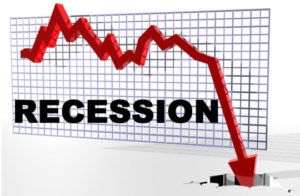
Nigeria’s recession deepened in the third quarter and oil production fell, the National Bureau of Statistics (NBS) said on Monday, as a dollar shortage kept Africa’s biggest economy in a stranglehold.
Gross domestic product contracted by 2.24 percent, the NBS said. A slump in crude prices led Nigeria’s economy to shrink by 2.06 percent in the second quarter, tipping it into recession for the first time in 25 years.
The NBS report comes a day before an interest rate decision, where analysts expect the central bank to hold benchmark rates at 14 percent, amid galloping inflation that hit a more than 11-year high of 18.3 percent in October.
Prices have been pushed up by the dollar scarcity in a country dependent on imports, which has been exacerbated by currency restrictions imposed by the central bank last year in an effort to defend the naira. Oil sales are the OPEC member’s main source of dollars to fund imports.
Last month, in a sign of growing disquiet, policemen and soldiers dispersed around 100 youth protesters who gathered at the central bank’s headquarters in the capital, Abuja, demanding the resignation of governor Godwin Emefiele over his policies.
“The ramp up in fiscal spending has been slower-than-anticipated, and the policy response in general remains weak,” said Cobus de Hart, economist at NKC Economists.
The NBS said oil production fell to 1.63 million barrels per day, down from 1.69 million in the second quarter. However, the non-oil sector grew by 0.03 percent in the third quarter, compared with negative growth in the first two, it said.
The recession has been deepened by a series of attacks by militants on oil and gas facilities in the southern Niger Delta since January that has cut Nigeria’s oil production. Crude oil sales account for two-thirds of government revenue.
Attacks have ramped up in the last few weeks following a lull that lasted a few months while militants and community leaders, who want a greater share of Nigeria’s energy wealth to go to the region, held talks with the government.
“We were expecting a more shallow contraction,” Standard Chartered Africa chief economist Razia Khan said.
“Much of it seems to have been driven by the outsized contraction in the oil sector once again, with much lower levels of oil production than we had expected.”
She said FX reforms were needed to “restore positive momentum” to Nigeria’s economy.
In October, the NBS said the economy is likely to shrink 1.3 percent in 2016, a sharp downward revision of its estimates at the beginning of the year, prompted by dramatic falls in the currency. The International Monetary Fund (IMF) has predicted that Nigeria’s economy will contract by 1.8 percent this year.
A senior Moody’s analyst told Reuters that Nigeria’s economy could expand by 2.5 percent next year as long it can produce 2.2 million barrels per day – the level at which the government made its budget calculations.