

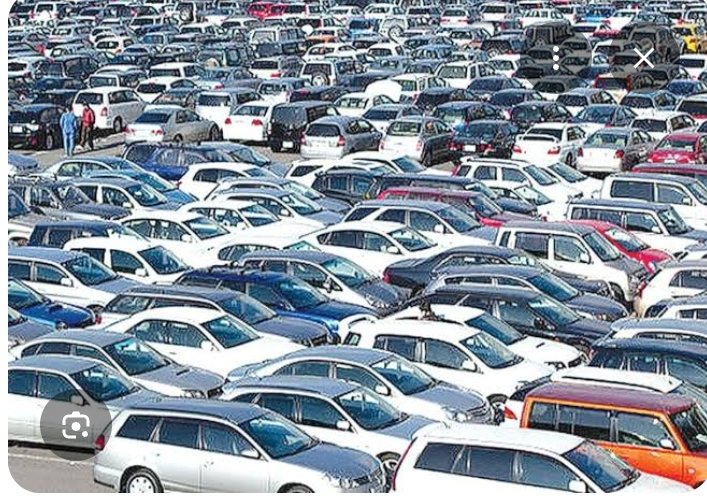
Nigeria’s Tokunbo market, worth over N1.58 trillion in passenger car imports in 2025 may have been hit by another global recall scare.
This is as more than 22,000 vehicles from Toyota, Honda and Ford have been recalled in North America over engine, braking and lighting defects, raising fresh safety concerns in Nigeria, where most cars on the road are imported used ones popularly called Tokunbo vehicles.
The recall, announced through Transport Canada and coordinated with the US National Highway Traffic Safety Administration (NHTSA) covers over 15,000 Toyota Tundra and Lexus LX 600 models, about 500 Honda Acura models, and over 6,500 Ford Transit vans.
The danger is simple: a car recalled abroad can be shipped to Nigeria before it is fixed, and the Nigerian buyer may never know, putting lives of buyers and users at risks.
Specifically, in Canada and America, major counties of patronage, a Toyota Tundra owner, for instance, gets a letter: Bring your car in, the engine could stall. In Lagos, Kano or Abuja, Tokunbo buyers get no letters. They get the same cars.
That is the danger behind the recall of the vehicles in North America, a development that was never meant to reach Nigeria, but whose cars very well could.
Toyota issued two recalls. The first covers 2022 and 2023 Tundra pickups and the 2022 Lexus LX 600. The engines “may not have been manufactured properly,” Toyota said. Metal debris could cause crankshaft bearings to fail.
“If this happens, the engine may run rough or may not start,” the alert said. “A sudden loss of power to the wheels could increase the risk of a crash.”
The second Toyota recall covers 2022 and 2023 Tundras that had an engine replacement, plus newer 2025 and 2026 gasoline, only models, fitted with faulty camshafts.
“As a result, the camshaft could break and the engine could stall while driving,” Toyota said. In both cases, Toyota will notify owners by mail and direct them to a registered dealership for repairs.
Honda, about 500 vehicles with brake failure
Honda recalled about 500 2024 Acura models that may have received ineffective repairs under a previous recall.
“Under certain conditions, a software problem could cause the antilock braking system (ABS) not to work properly. As a result, the ABS could cause reduced braking or a loss of brakes,” Honda said.
Honda will notify owners by mail and push a wireless software upgrade to eligible vehicles.
Ford, over 6,500 vehicles, with lighting failure
Ford recalled over 6,500 2026 Ford Transit vans. A problem with the body control module could cause trailer lights not to work when towing.
“Trailer lights that don’t work could make the vehicle less visible and cause following drivers not to recognize that the vehicle intends to turn or change lanes. These issues could increase the risk of a crash,” Ford said.
Ford will also notify owners by mail and push a wireless software upgrade.
Why It Matters In Nigeria — The Tokunbo Gap
Over 70% of cars on Nigerian roads are used vehicles. Most are Tokunbo which were bought at auction in the US or Canada, shipped to Apapa, Tin Can Island or Port Harcourt, and sold at Berger, Ladipo, Apo, or Onitsha.
That is where the recall system breaks down.
READ ALSO:North Korean Launderers Turn To Little-known Crypto Services To Move Binance Haul, Say Researchers
When a manufacturer issues a recall, it notifies the registered owner in the original market, usually in North America, Europe or Japan. Once the car is exported to Nigeria, it enters a fragmented chain of dealers, brokers and individual importers. The link between the manufacturer’s database and the new owner is severed.
There is no central, mandatory database in Nigeria that cross-references imported Vehicle Identification Numbers (VINs) against international recall registries at the point of entry.
The Standards Organisation of Nigeria (SON) is tasked with ensuring imported goods meet standards, but the sheer volume of imports makes VIN-by-VIN recall checks a logistical challenge. The Federal Road Safety Corps (FRSC) publishes a weekly global recall bulletin, but it has no power to stop a recalled car at the port.
As one industry expert puts it: “Most safety issues in the Nigerian used car market are only identified after an accident has occurred or after a vehicle begins to fail mechanically.”
IMPACT On Users — Safety, Cost, No Remedy
Metrobusinessnews.com (MBN) checks show that safety risk is higher in Nigeria, compared to Canadan highways.
For example, a stalling engine on a Canadian highway is dangerous, but a stalling engine on the Lagos-Ibadan Expressway, at night, with no streetlights and trucks behind, is deadly. A brake failure on a Third Mainland Bridge descent, or a lighting failure on a dark Abuja-Kaduna road, multiplies the risk.
More worrisome is the fact that Nigeria already has one of the highest road traffic fatality rates in Africa, adding unrepaired recalled cars to that mix makes it worse and more deadly.
No Free Fix
In North America, recall repairs are free. In Nigeria, a Tokunbo buyer is a “grey market” owner. As dealers have told FRSC in the past, grey-market buyers “would not enjoy the manufacturers’ recall benefits.” Toyota’s Nigerian representative, CFAO Motors, has previously said it takes supply from Japan, not the US, and needs directives from Japan before it can repair a US-spec recall.
The implication is that the Nigerian owner therefore pays for the repair himself, if at all he even knows the car was recalled.
No Connection, Notification
Honda and Ford are fixing some defects with over-the-air software updates. That only works if the car is still connected to the manufacturer’s system and the owner is registered. A Tokunbo car in Nigeria is not. The owner will not get the mail, the email, or the update.
What Users Could Do
For discerning and careful Nigerians, the way out could be, according to analysts getting the 17-character VIN from the dashboard and door sticker before payment, then checking it on http://NHTSA.gov/recalls or Transport Canada’s recall lookup, or through a paid VIN history report.
However, in most cases the dealers may not be forthcoming with regards to whether the VIN has had any open recall, a situation the analysts see as red flags
Impact On The Market
Trust , as the currency upon which the Tokunbo market thrives would fall. This is because a buyer in Lagos cannot inspect a car in Texas. He trusts the dealer. Every recall story even if only a few of the 22,000 cars ever reach Nigeria, erodes that trust. Also buyers will delay purchases as they would ask more questions or demand for discounts.
The market may witness two different prices as clean, verified cars with a clear VIN history will hold their price, while unverified cars, especially 2022-2023 Tundra, 2022 Lexus LX 600, 2024 Acura, and 2026 Transit will face price pressure, with attendant losses by dealers who may not be able to prove a recall was fixed.
Impact On The Economy
Nigeria spent about N1.58 trillion importing passenger cars in 2025, and that would mean spending the scarce foreign exchange on cars that may carry hidden defects, may need expensive repairs, and ultimately may have shorter lifespans than the buyer expects.
For the Customs, they value the cars and collect duties while the SON checks standards. But neither is mandated to block a car with an open recall. The system is built to collect revenue, not to protect safety. Until VIN recall screening becomes mandatory at Apapa and Tin Can, the revenue will keep flowing and the risk will keep coming in with it.
Also, an unrepaired recalled car that crashes does not just hurt the owner, it raises insurance claims, raises hospital costs, raises the burden on FRSC and emergency services, and raises the cost of doing business. Ditto for a truck that stalls, a delivery van that cannot brake, a staff bus that loses lights.
The implication is that Jobs in the informal sector are at stake as the Tokunbo trade employs thousands. importers, clearing agents, mechanics, panel beaters, sprayers, dealers, drivers. A loss of confidence in Tokunbo does not just hurt dealers. It hurts the whole value chain. But a market that does not protect buyers will eventually lose buyers anyway.
As Nigeria continues to rely on foreign-used vehicles to meet transportation needs, the effectiveness of its vehicle safety framework will increasingly depend not only on screening cars before importation but also on ensuring that defects identified after they enter the country are communicated and addressed.