

* 100-Metre Pits, Missing Sand: How Design Flaws ‘Forced Lagos-Calabar Highway Reroute’
* Umahi insists Highway Intact
The Lagos-Calabar Coastal Highway, Nigeria’s biggest infrastructure project in a decade may no longer be fully coastal, and Nigerians have continued to express worries over public expenditure patterns.
However, the revelation by the minister of Works David Umahi last week that President Bola Tinubu directed that sections of the 750km highway from Ondo State be rerouted through the existing East-West Road to Edo State has conrinued to generate concerns as to whether there was a proper assessment of the project from the begining.
However, Umahi, on Monday dismissed reports that the Federal Government had abandoned the 750-kilometre Lagos-Calabar Coastal Highway in favour of the East-West Road.
Nigerians had taken to social media on Monday to criticise Umahi over his recent statements on the coastal highway, which they said suggested a realignment contrary to the initial project plan.
Umahi spoke to State House correspondents on Monday after meeting President Bola Tinubu at the Aso Rock Presidential Villa, Abuja. He described the claims that the coastal project had been abandoned as “mischievous”.
But Umahi had defended the action of government saying it was to avoid difficult terrain, including pits exceeding 100 metres in depth and areas where sharp sand was unavailable up to 300 metres, confirming fears of Nigerians with regards to due diligence.
Specifically, the disclosure, which Umahi later clarified as a complementary 400km East-West Road addition rather than abandonment, has reopened the debate on how the project was planned, costed and procured — and whether a route change of this scale requires fresh approvals from the Bureau of Public Procurement and the National Assembly.
Questions are mounting over the Federal Government’s decision to reroute parts of the Lagos-Calabar Coastal Highway through the existing East-West Road, a move critics say breaches procurement and appropriation laws.
Also, Umahi dismissed claims of abandonment as “mischievous,” insisting the original coastal alignment remains intact, the reroute was driven by engineering realities and that the project was awarded to Hitech Construction through restrictive procurement approved by BPP and FEC, with 70% foreign financing.
READ ALSO:IMF Says AI Investment Keeps Global Growth Around 3%, With
Some Nigerians are asking as to whether the approvals and costs would not change if the route changes.
“If work on the original route will no longer be done, what has been removed from the contract? How much has already been paid? What is the revised price?”, queries a concerned Nigerian
At stake is not just 400km of road, but investor confidence in how Nigeria procures mega-projects.
This is because, according to some Nigerians, the highway was awarded without open competitive bidding under restrictive procurement.
Umahi says Section 16 of Procurement Act allows it. Critics cite same Section requiring competition. The reroute now forces the question: can you change a multi-trillion naira project mid-way without a new Bill of Quantities, new EIA and fresh NASS reappropriation? If not, is it illegal variation?
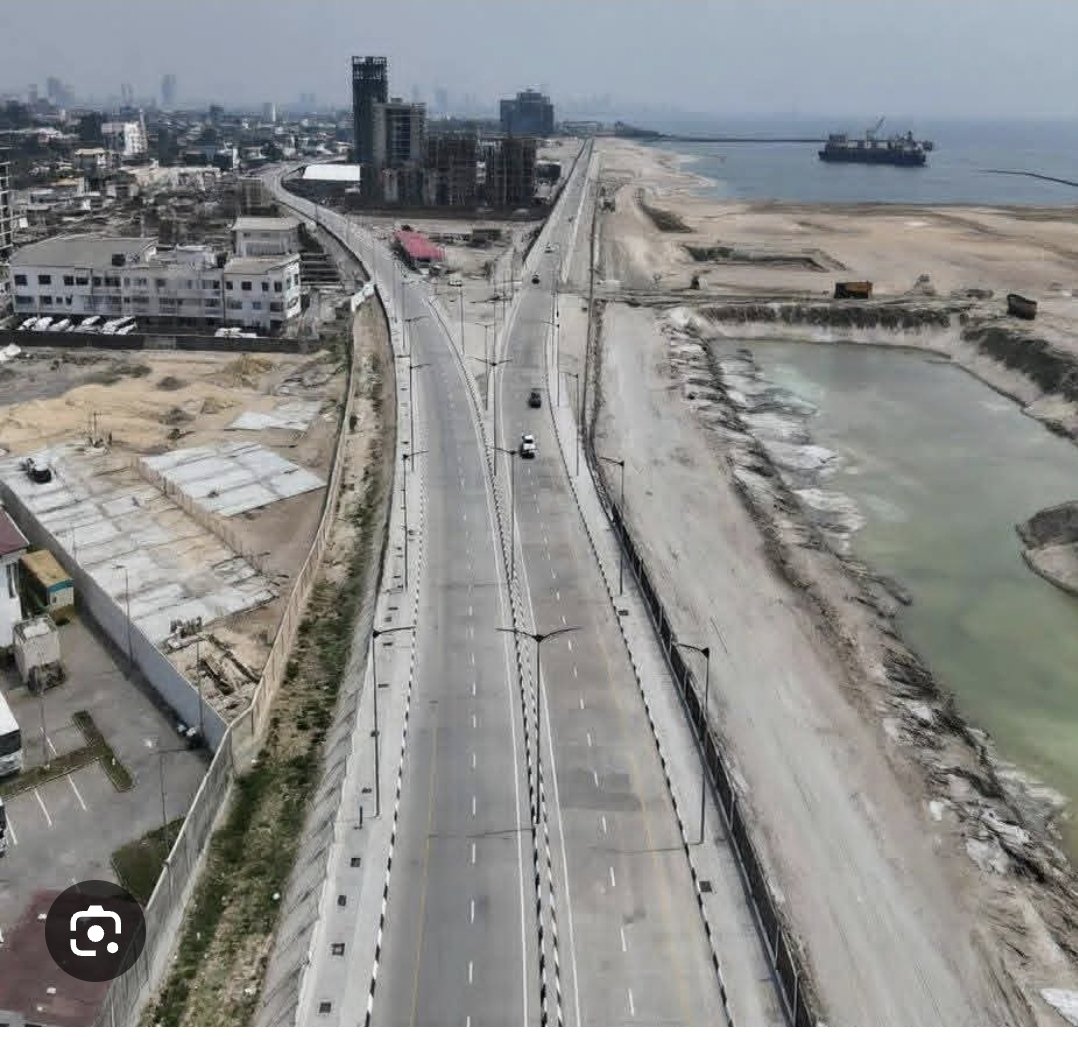
The 700-kilometre highway, estimated to cost N15 trillion, which began in March 2024, is intended to connect coastal communities from Lagos through the South-West and South-South regions and support marine logistics, tourism, real estate and wider economic activity.
Umahi insists on the fact that the directive follows earlier realignments in Ondo State, where the minister said difficult terrain and unsuitable soil conditions made the original route more expensive and technically challenging to construct.
Umahi said the original alignment crossed pits more than 100 metres deep and areas where suitable sharp sand was unavailable for construction at depths of up to 300 metres.
Although the government has cited engineering and cost considerations for the rerouting, the changes have caused a fresh scrutiny of whether sufficient feasibility studies were conducted before construction and if the original procurement process adequately assessed the project’s technical challenges.
The Ilaje Omuro Community Connect, representing concerns raised by coastal communities, said the realignment could deny the Ilaje people access to the economic benefits of the highway.
“The issue at stake is not merely the construction of a road; it is a question of fairness, economic inclusion, environmental protection, and the right of the Ilaje people to benefit equitably from a major national development project,” the group said.
“If roads can be constructed within the Ilaje coastal environment, what specific engineering, geological, environmental, or financial considerations make the proposed coastal highway route impracticable?” it asked.
The Environmental Impact Assessment (EIA) Act, Cap E12, Laws of the Federation of Nigeria 2004, provides for environmental effects to be assessed before a project proponent makes a final decision to proceed or begins physical work.
Section 24 of the Act also provides for public display of draft EIA reports for at least 21 working days.
The Federal Ministry of Environment published draft environmental and social impact assessment reports for the first two Lagos sections in 2024.
The contractor’s non-technical summary for Section One states that approval was issued on November 8, 2024, although construction activities had begun earlier that year.
Donald Duke, former Cross River governor and presidential candidate of PRP, has also questioned the practicality of building a continuous coastal route through swampy terrain.
“You cannot build a road on the coast from Lagos to Calabar. I mean, you can’t even go through Bayelsa. Bayelsa is a swamp,” he said in a recent interview, arguing that the terrain would require extensive bridge construction.
An infrastructure analyst linked the controversy to the project’s procurement and environmental assessment processes.
“What we are seeing now is the consequences of lack of EIA and lack of proper bidding for the project,” the analyst said.
“If there had been proper bidding for the project, the bidders would have detected the Ondo axis before the project was awarded,” he noted.
The Federal government had said it used restrictive bidding for the selection of Hitech Construction Company Ltd. as the contractor for the project.
The latest changes have also prompted debate over whether realignments necessarily indicate planning failures.
UmahiI Insists Highway Intact
Howe er, Minister Umahi, on Monday dismissed reports that the Federal Government had abandoned the 750-kilometre Lagos-Calabar Coastal Highway in favour of the East-West Road.
Nigerians had taken to social media on Monday to criticise Umahi over his recent statements on the coastal highway, which they said suggested a realignment contrary to the initial project plan.
Umahi spoke to State House correspondents on Monday after meeting President Bola Tinubu at the Aso Rock Presidential Villa, Abuja. He described the claims that the coastal project had been abandoned as “mischievous”.
The minister explained that the planned addition of 400 kilometres of the East-West Road to the Federal Government’s infrastructure programme was a complementary project and would not replace any part of the coastal highway.
He said the original alignment of the coastal highway remained intact, adding that construction was ongoing on several sections simultaneously.
Umahi said the decision to incorporate the East-West Road into the wider plan was driven by the need to improve regional connectivity, protect existing infrastructure from flooding and boost investment in the Niger Delta.
According to him, “What we have done is to also seek the approval of Mr President to add the 400 kilometres of the East-West Road, starting from Edo State down to Akwa Ibom, and also to Cross River.”
He noted that although parts of the coastal highway had been procured in Cross River and Akwa Ibom states, the East-West Road extended beyond those sections, making its integration necessary for wider regional development.
The minister said some sections of the East-West Road had been built below flood levels. About three weeks ago, he recalled, parts of the road around Agbarho, in the Ughelli axis of Delta State, were badly damaged, forcing the state government to intervene.
He said Edo State had faced similar problems, strengthening the case for a comprehensive intervention along the 400-kilometre corridor.
Umahi said work on the East-West Road would not interfere with the coastal highway’s alignment.
He said survey and engineering work was ongoing in states where major construction had not started.
“So nobody has abandoned the 750-kilometre Lagos-Calabar Coastal Highway.
“In fact, as we are talking now, we have surveyors. We are surveying the axis of Edo State, we are surveying the axis of Delta State, we are surveying the axis of Bayelsa, and then Rivers, and that will be the end of the Lagos-Calabar Coastal Highway,” he said.
He added, “So the 750-kilometre coastal highway is intact and cannot be changed, and nobody has the powers to change it, because it’s already designed and it’s ongoing.”
Umahi, who was accompanied by the Special Adviser to the President on Special Duties, Mr Toyin Zubair, was responding to social media discussions suggesting that the Federal Government had shifted its focus to the East-West Road.
He said, “My attention was drawn this afternoon by social media that we had abandoned the alignment of 750 kilometres of Lagos-Calabar Coastal Highway in favour of an alignment of the East-West Road. That is very mischievous information.
“The Lagos-Calabar Coastal Highway is moving and moving even faster than envisaged.”
The minister said Section One, covering 47.7 kilometres in Lagos State, had been fully constructed, while Section Two, covering 55 kilometres, would be ready by the middle of November.
He said work was progressing on Sections 3A and 3B, covering 75 kilometres across Cross River and Akwa Ibom states, with construction more than 40 per cent complete.
“Sections 4A and 4B, covering about 65 kilometres between Ogun and Ondo states, are also under construction,” he stated.
He added, “The alignment from the Lagos end has advanced into Ondo State.”
Umahi said work was also progressing from the Calabar end, in line with Tinubu’s directive that the administration’s four legacy road projects should begin simultaneously from both ends.
“Another section in Akwa Ibom State, measuring 62.5 kilometres, has passed 20 per cent completion, though construction began less than three months ago,” he added.
Umahi also said Tinubu had approved an expansion of another legacy project connecting Akwanga, Jos, Bauchi, Gombe, Biu and Maiduguri.
“The original 700-kilometre project has been expanded by 410 kilometres through Langtang and Wukari, bringing the total planned length to about 1,100 kilometres,” he added.
He disclosed that the expansion followed the administration’s plan to extend major highway corridors to link communities and stimulate economic activity.
But prominent Nigerians, including Femi Falana, (SAN) Atiku Abubakar, ADC presidential candidate, Odinkalu, a human rights lawyer and former Chairman of the National Human Rights Commission, Adegboruwa (SAN), Akingunola, the All Progressives Congress candidate in Ondo, among others have xo rinued to doubt the sincerity of tje government on the project, while urging Tinubu to order an independent review of the alleged realignment.
They also called on indigenes of the state and members of the National Assembly to insist on strict adherence to the rule of law by the minister so as to safeguard the collective interests regarding the coastal highway project.