

The Economic Community of West African States (ECOWAS) has stepped up efforts to establish a regional carbon market platform as the bloc seeks to bridge a $294 billion climate-finance gap and unlock West Africa’s vast potential in international carbon markets.
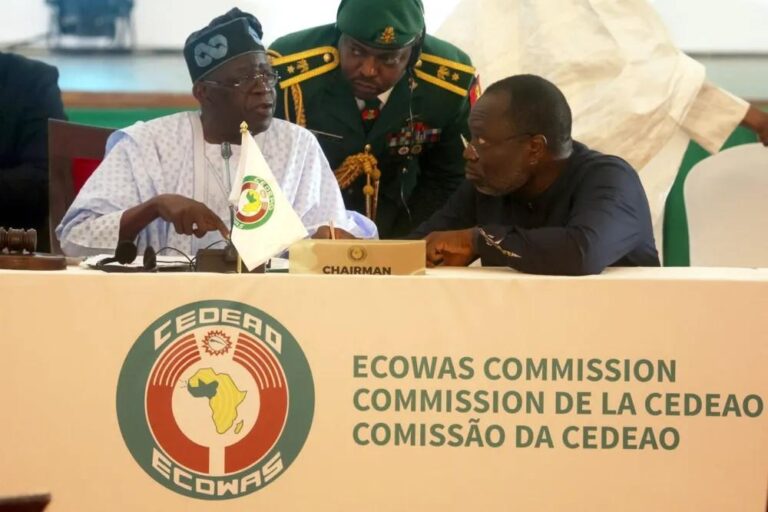
The move took centre stage in Abuja on Wednesday at a three-day regional workshop convened to validate the framework for establishing the platform, bringing together representatives of ECOWAS Member States, regional and international organisations, technical and financial partners and climate experts.
Speaking on behalf of the ECOWAS Commission leadership, a representative of the Commission, the Director for Environment and Natural Resources, Mr. Christophe Deguenon, conveyed greetings from the President of the ECOWAS Commission, Omar Alieu Touray, and the Commissioner for Economic Affairs and Agriculture, Kalilou Sylla, while expressing appreciation to Nigeria for its continued support for regional climate initiatives.
The ECOWAS representative said the urgency of the initiative was underscored by the growing vulnerability of West Africa to climate change, warning that rising temperatures, climate-induced displacement and environmental degradation were threatening livelihoods and economic development across the region.
According to the ECOWAS presentation, temperatures in West Africa could rise by between 1.5°C and 3°C by 2050, based on projections by the Intergovernmental Panel on Climate Change (IPCC).
The World Bank, it added, estimates that nearly 32 million people could be forced into internal displacement as a result of climate impacts.
The representative noted that, in response to the crisis and the global goal of limiting temperature increases to 1.5°C, ECOWAS Member States had adopted Nationally Determined Contributions (NDCs), progressively increasing their climate-mitigation ambitions through successive reporting cycles.
But as national ambitions increase, so too does the amount of financing required to implement them.
The ECOWAS representative disclosed that the bloc’s Regional Strategy for Access to and Mobilization of Climate Finance, adopted in 2022, had estimated the region’s financing requirements at $294 billion, based on conditional needs contained in the Member States’ second-generation NDCs.
“Four years later, with the submission of NDCs 3.0, these needs have significantly increased,” the representative said, attributing the rise to stronger national climate ambitions and the growing urgency to mobilise climate finance at scale.
The regional climate-finance strategy had identified the establishment of a regional framework for the operationalisation of Article 6 of the Paris Agreement as one avenue for addressing the financing deficit.
The ECOWAS representative said the framework would help West African countries leverage their enormous environmental assets through carbon markets and attract additional resources for climate action.
West Africa, according to the Commission, possesses significant natural capital capable of generating high-integrity environmental and social carbon credits.
This includes more than 350 million hectares of agricultural land, major forest blocks and mangrove ecosystems, as well as enormous opportunities for restoring degraded landscapes.
The Commission, however, acknowledged that the region has yet to fully exploit these opportunities.
Despite its considerable carbon-market potential, West Africa remains insufficiently active in international carbon markets, with regulatory weaknesses, limited technical capacity, inadequate tracking systems and certification challenges continuing to constrain participation.
It was against this backdrop that the ECOWAS Commission launched an ambitious regional process in 2024 to develop a harmonised framework for establishing a regional carbon market platform.
The initiative is aligned with the ECOWAS Vision 2050 and the African Union’s Agenda 2063.
READ ALSO:IEA Cuts 2026 Oil Demand Forecast Again As Hormuz Remains Shut
The proposed platform will be built around four key principles: transparency, environmental integrity, inclusive governance and the valuation of Member States’ climate efforts.
Meanwhile, in his opening remarks, Nigeria’s Minister of Environment, Balarabe Lawal, said the regional initiative was both timely and strategic, stressing that climate change posed serious threats to the economies, ecosystems, food security and livelihoods of West Africans.
Lawal, who was represent by a director in the ministry, Mrs. Iniagbon Abiola-Awe, said Nigeria was committed to working with ECOWAS, Member States and development partners to transform the proposed platform into a practical mechanism capable of delivering tangible benefits to the region.
He disclosed that Nigeria had launched its Carbon Market Framework at COP30, while its national carbon-market registry was under development.
The minister said a regional platform would complement national initiatives by enabling Member States to share information, facilitate peer-to-peer learning and showcase the carbon-market potential of West Africa.
According to him, a well-designed regional carbon market could help Member States attract climate investment, promote nature-based solutions, increase private-sector participation and create green jobs.
The Abuja workshop is expected to subject the draft regional framework to rigorous technical and legal scrutiny before its adoption.
The ECOWAS representative challenged experts and Member States to use the three-day exercise to strengthen the document and establish a credible mechanism capable of attracting investors and supporting national climate ambitions.
The representative disclosed that the draft framework was developed by consulting firm AETS, with support from partners including BDO Carbon and S&P Global, among others.
The Commission also acknowledged contributions made during carbon-market engagements in Paris and at the UN climate conferences in Dubai and Baku.
The regional platform, the ECOWAS representative stressed, should not be viewed merely as another institutional mechanism but as an instrument of regional cooperation.
It is expected to facilitate the pooling of expertise and experience, reduce transaction costs, strengthen the capacity of Member States and improve West Africa’s visibility in international carbon markets.
The Commission called on participants to prioritise dialogue, consensus-building and the broader interests of the region as they deliberate on the framework.
The ECOWAS representative expressed confidence that the workshop would produce a “solid, consensual and sufficiently ambitious” regional framework capable of ushering in a new era of climate finance in West Africa.
For Nigeria, the initiative represents an opportunity to position the region not merely as a victim of climate change but as a significant participant in the emerging global carbon economy.
The workshop is expected to culminate in the validation of the framework, incorporation of technical and legal recommendations, approval of governance arrangements and adoption of a regional implementation roadmap.