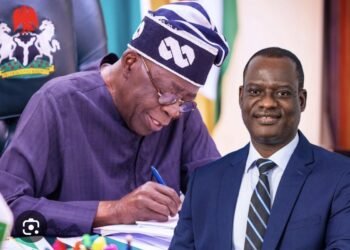



Amid worsening living conditions of Nigerians for which analysts attribute to the reforms, the federal government has continued to justify the policy decisions, arguing that the accruing savings from the removal of fuel subsidies and foreign-exchange market reforms had largely been absorbed by higher debt-servicing costs and increased government spending.
President Bola Tinubu’s 2023 reforms won backing from investors and international lenders, but drove up living costs for millions of Nigerians, raising scrutiny of how the resulting savings have been used.
But at the African Emerging Markets Forum in Abuja, Finance Minister Taiwo Oyedele said fuel subsidies and what he described as an implicit foreign-exchange subsidy had cost Nigeria roughly 5% of GDP before their removal.
READ ALSO:Tinubu Receives Catholic Bishops In Abuja, Defends INEC’s Neutrality Ahead Of 2027 Election
Oyedele said part of the savings had been absorbed by higher debt-servicing costs, with borrowing rates rising to as much as 24% from around 8% before the reforms.
He said the government’s wage bill nearly doubled after the minimum wage was more than doubled to 70,000 naira a month.
The government has also increased spending on an education loan programme that provides tuition support and monthly stipends to more than 1.5 million students, he said.
Oyedele rejected a recent IMF assessment that millions of Nigerians remained in poverty despite reforms welcomed by investors, arguing that a temporary decline in real incomes was inevitable after subsidy removal.
He said the government would track progress through multidimensional poverty, real per-capita income growth, and income inequality, rather than by headline GDP growth alone.