

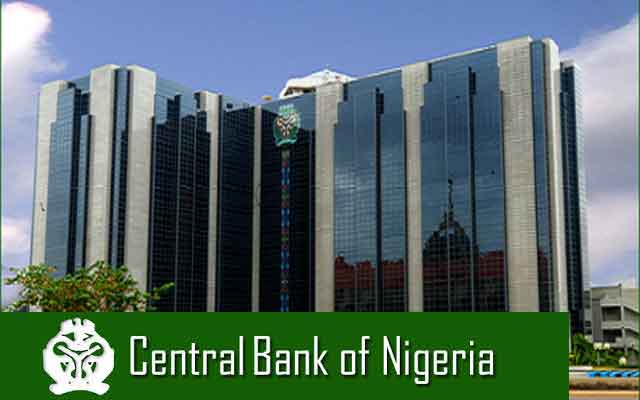
The Central Bank of Nigeria (CBN) has proposed a sweeping overhaul of the regulatory framework for Financial Holding Companies (HoldCos), including measures to strengthen the operational independence of subsidiaries by prohibiting parent companies from participating in lending decisions and credit approval processes.
The move would also require the HoldCos to maintain a minimum 51 per cent ownership stake in their subsidiaries.
HoldCo banks in Nigeria are commercial banks that operate under a non-operating financial holding company structure, approved by the CBN.
They include the big banks, with the acronym, FUGAZ with significant capital buffers driven largely by their share premiums.
First HoldCo, UBA, GTCO, Access Holdings and Zenith Bank.
Others are FCMB Group Plc, Stanbic IBTC Holdings Plc, Sterling Financial Holdings Company Plc and Wema Bank Plc which
operates as Wema Bank and its fintech ALAT. It filed as a HoldCo structure in recent NGX filings.
Zenith Bank Plc operates as Zenith Bank Holding Company but is often referenced as Zenith Bank Plc in reports, while United Bank for Africa (UBA) is UBA Plc, not a HoldCo structure.
Ecobank Transnational Incorporated is a pan-African holding company, but headquartered in Togo.
Some analysts see the proposed regulation reflecting the regulator’s efforts to address emerging risks arising from the expansion of Nigerian banking groups across Africa and the growing complexity of their corporate structures.
Specifically they say the new draft exposure seems to be seeking ways to strengthen governance in these Nigerian entities that are structured in a way that their African operations are directly under the bank and then the bank comes under the financial holding company.
Metrobusinessnews.com (MBN) gathered that the new draft exposure may be bringing the foreign interests under the FHC rather than the Nigerian banking subsidiary, which would then remove the encumbrance of managing these African subsidiaries on the Nigerian bank and take that risk to the financial holding company.
The proposed reforms, contained in the ‘Exposure Draft of the Revised Guidelines for Licencing and Regulation of Financial Holding Companies in Nigeria,’ posted on the apex bank’s website, were also aimed at strengthening governance, enhancing accountability and ensuring clearer ownership structures within Nigeria’s increasingly diversified financial groups.
In prohibiting parent companies from participating in lending decisions, it stated that a HoldCo shall not: “Be involved in credit administration and approval processes of any of its subsidiaries.”
It added: “Loans by a banking subsidiary to its HoldCo would be regarded as a return of capital and deducted from the capital of the bank in computing the bank’s capital adequacy ratio.”
According to CBN, the review became necessary after years of implementing the existing framework introduced in 2014.
The draft signed by Director, Financial Policy and Regulation Department, Dr. Rita Sike stated: “Following several years of implementation, the CBN has identified areas within the extant Guidelines that require enhancement to strengthen the operational effectiveness and regulatory oversight of Financial Holding Companies.
“Accordingly, the Guidelines has been reviewed to address observed gaps and align with evolving regulatory and market developments.”
One of the most significant changes proposed by the regulator is the introduction of a mandatory majority ownership requirement for all subsidiaries under financial holding companies.
Highlighting the key amendments, the apex bank stated that the revised framework would introduce, “Ownership and Control Requirements: Requiring FHCs to hold a minimum of 51 per cent equity stake in each subsidiary and to be registered as a person with significant control by the appropriate corporate registration authority.”
The proposed requirement, according to the Arise News, is expected to strengthen the ability of HoldCos to exercise effective oversight over subsidiaries while eliminating ambiguities around control and accountability within financial groups.
READ ALSO:Abiodun Declares Ogun On Red Alert,Unveils Tech-Driven Security Plan Amid Rising Insecurity
The CBN also moved to draw a clear line between the responsibilities of parent companies and those of subsidiaries by prohibiting HoldCos from interfering in operational and business decisions.
According to the draft guidelines, a HoldCo shall not “Arrogate to itself any of the powers or functions of the board or management of any of its subsidiaries or associates.”
The regulator further stated that: “Without prejudice to Section 18 of BOFIA 2020, the practice whereby members of the Board or Management of a subsidiary attend meetings of the Board of the HoldCo and vice versa is prohibited.”
In a particularly strong provision targeted at preserving the independence of subsidiary institutions, the apex bank stated that a HoldCo shall not: “Interfere in the day-to-day activities of the subsidiaries.”
The draft further provides that parent companies must not compel subsidiaries to take instructions from them in the conduct of business.
According to the CBN, a HoldCo shall not: “Require its subsidiaries (including any employee, staff, manager, officer or director thereof) to take directives or act on the instructions of the HoldCo in its decision-making process, or in relation to the conduct of its business in any way whatsoever.”
Beyond governance reforms, the proposed framework also introduces stricter capital requirements for financial holding companies.
The CBN stated: “A HoldCo shall have and maintain a minimum regulatory capital which shall exceed the sum of the minimum regulatory capital of its subsidiaries by at least 20 per cent.”
It added that only paid-in capital would be recognised when assessing compliance with the requirement.
The draft further clarified: “It is the capital of the HoldCo that is applied to the subsidiaries. Consequently, excess capital in one subsidiary shall not be used to make up a shortfall in another subsidiary.”
The revised framework equally tightens oversight of shared services arrangements among members of financial groups.
According to the apex bank, “The HoldCo shall not engage in any transaction or maintain any business relationship with any of its subsidiaries, except such transaction is conducted at arm’s length.”
The guidelines further state that: “Shared services shall be provided at arm’s length. Transactions in respect of such services shall require the consent of the boards of directors of the FHC and the relevant subsidiary.”
To ensure accountability, the CBN directed that: “A value for money audit in respect of shared services shall be conducted at least once every two years by an approved auditor and the report submitted to the Director, Banking Supervision Department, CBN not later than March 31 of the year following the year the audit relates.”
The regulator also tightened rules governing intra-group lending and insider-related transactions, declaring that: “There shall be no insider-related borrowings within a HoldCo.”