


*petrol Now N960 in Abuja, N935 in Lagos
By John Danjuma Omachonu
The escalating conflict between the United States, Israel and Iran which has nearly paralysed activities in the Middle East has started taking its tolls on Nigerians as filling stations have started adjusting pump price of premium motor spirit (PMS) otherwise known as petrol.
Other products like diesel and the elusive kerosene would follow suit immediately.
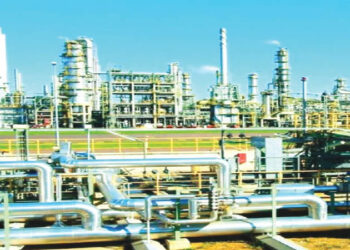
On March 2, 2026 Dangote Petroleum Refinery moved its ex‑depot (gantry) price from N774 to N874 per litre—a N100 jump, in what analysts regard as a hasty development .
The company said the revision was forced by “changes in global crude fundamentals and replacement costs” after international crude spiked past $80 a barrel overnight.
Also, Nigerian petroleum marketers and retailers announced that the retail price of Premium Motor Spirit will increase starting Tuesday and Wednesday, March 3 and 4, following the Dangote Refinery’s decision to raise its gantry price to N874 per litre.
In response to the filling stations immediately adjusted pump prices across the country.
In Abuja, some retail stations belonging to the Nigerian National Petroleum Company Limited (NNPCL) adjusted pump price to N960 from N875.
Checks in Lagos along Ogunnusi Road indicated that none of the NNPC stations was dispensing but other filling stations had adjusted pump price to reflect the new price.
Iran airstrikes hit Saudi Arabia’s biggest oil refinery
For instance a Bovas filling station increased its pump price from N835 per litre to N935
The price shock arrives barely weeks after a rare reprieve. Dangote had reduced its ex-depot rate from N799 to N774 per litre in February 2026, offering temporary relief to motorists battered by months of naira weakness and import costs. That relief has now been fully reversed.
There are fears prices of PMS would increase further as there is no end in sight to the conflict in Iran which was fuelled by the Saturday’s attacks on Iran by US-Israel in a joint strike which claimed the lives of Iran’s Supreme Leader Ayatollah Khamenei and others from all the sides.
Iran had responded with ceaseless attacks on US military bases and interests in neighbouring Middle East countries including UAE, Qatar, Bahrain, Saudi Arabia, among others.
The development has disrupted global oil supply with crude oil prices recording sharp increases across board.
Brent Crude surpassed $80 on Monday and it currently trades at $84.2 per barrel.
While this implies increased revenue from oil receipts for Nigeria, Nigerians are also going to pay more for PMS; the development which threatens to worsen inflation and economic shocks and more pains for Nigerians.
Metrobusinessnews.com (MBN) went to town to gather opinions about the development.
Some Nigerians say Dangote’s reaction, from a consumer‑pain perspective, was hasty as the crisis started just three days into the conflict, when prices were still volatile.
However, from a business‑survival view, the refinery argued it had little choice because crude had already rallied and loading was halted.
READ ALSO:Oil Rises As Expanding US-Israeli Conflict With Iran Elevates supply Risks
The speed reflects deregulation, not necessarily profiteering, though critics note the refinery had earlier promised pump prices around N740 and is now seeing retail rates near N980‑N1,000.
On the iImplications for Nigerians and the economy, they argue that the immediate response would be on transport and food costs as Petrol at N874 ex‑depot feeds into pump prices projected at N980‑N1,000/litre in Abuja and Lagos.
“Higher transport fares ripple into food distribution, market prices, and household budgets are expected to be under severe pressures,” an analyst said
For inflation, touted to have reduced considerably in recent times may also be under pressure as energy is a big weight in Nigeria’s CPI.
“Deregulated fuel prices mean global crude shocks transmit directly to inflation, squeezing real wages already hit by food and FX pressures,” he added.
Generaally, they observed that business operating costs would rise as logistics, generator diesel (which also rose), and aviation fuel climb, tightening margins for SMEs and manufacturers who rely on road haulage and backup power.
Further checks by MBN showed that, the country might experience fiscal and political risks.
The argument is that the absence of subsidy to cushion the effects of these developments would mean public anger directed at Dangote and the government as the complaints have been that the removal has not impacted positively on the lives of most nigerians except government at the centre and subnational.
Also, the development may have put the “Naira‑for‑Crude” deal meant to stabilise local supply under scrutiny.
However, they were quick to observe that Dangote’s ability to adjust quickly shows domestic refining capacity exists, reducing import dependence, adding that a deregulated market with no subsidy buffer, leaves no option for Dangote but to pass the replacement cost through, as waiting would mean selling below what it costs to buy the next cargo.
The hike, they further argue, mirrors an external oil shock, not purely a local decision. It’s economically “justified” as cost‑recovery in a deregulated market, but socially painful and politically sensitive, especially while the Middle‑East conflict is still unfolding.
How quickly Nigeria, Africa’s most populous nation, ramps up production to move from between 1.4 to 1.5 m per day to around 2 million to enjoy the windfall remains to be seen.