


The Senate on Wednesday approved the sum of N982.729 billion as supplementary budget for the 2021 fiscal year.
The approved sum which represents an upward review of N86.9 billion from the initial amount of N895.842 billion transmitted to the National Assembly by President Muhammadu Buhari about two weeks ago is to address rising insecurity in the country and fund COVID-19 vaccines.
But the approval has elicited mixed reactions following upsurge in killings, abductions and kidnappings, among others.
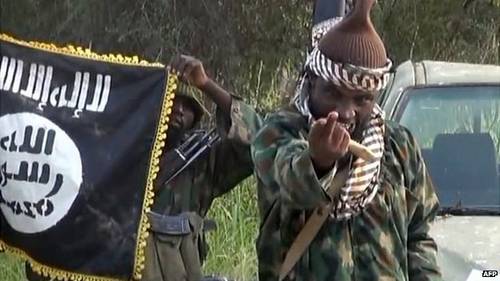
Nigeria, Africa’s biggest oil producer, is grappling with mass abductions at schools, kidnappings for ransom, conflict between herdsmen and farmers, armed robberies and various insurgencies in the north of the country.
Some analysts are asking as to whether the recent upsurge is as a result of lack of funds, strategy or political will.
The growing insecurity in making some Nigerians to lose faith and confidence in the country
Senate leader Ahmad Lawan said parliament should be vigilant in monitoring how the extra funds will be used, in a country that has struggled for decades with corruption.
“It is very important that we have a review of the application of these funds before we pass the 2022 Appropriation Bill,” Lawan added. “But this is a very necessary intervention by this National Assembly particularly this Senate and indeed the administration in the country.”
The government had not made a provision to cover the cost of COVID-19 vaccinations when it adopted the 2021 budget in December. President Muhammadu Buhari has said health authorities plan to vaccinate 70% of adults this year and next.
But, the present coverage is very far from the expectation, a development, they say, may put most Nigerians in jeopardy considering growing variants of the pandemic all over the world.
However, the passage of the supplementary Appropriation Bill followed the consideration of a report by the Committee on Appropriation during plenary.
Accordingly, out of the total sum of N982,729,695,343 billion passed, N123,332,174,164 billion is for Recurrent (Non-Debt) Expenditure; and N859,397,521,179 billion as contribution to the Development Fund for Capital Expenditure.
Chairman of the Appropriation Committee, Senator Barau Jibrin, in his presentation explained that the sum of N45.63 billion required for COVID-19 vaccine Programme would be sourced through existing World Bank Loan as well as other Grants.
He added that the balance of N37.93 billion would be sourced from Special Reserve/Levy Accounts comprising: TSA (Foreign currency component) – N25 billion; MOFI CHQ optional – N5 billion; and Foreign Revenue E-Collection – N30 billion; 65 percent Wheat Floor Levy – N15 billion; 5.15 percent Wheat Grain Levy – N15 billion; and Rolled-Over Capital (unspent) – N5 billion.
The lawmaker disclosed that the balance of N722.40 billion which is for capital expenditure on procurement of additional equipment for the security and capital supplementation would be sourced from new borrowing.
Barau explained that the Committee in line with the harmonised position with its House of Representatives counterpart recommended an upward review of the funding of some Security Agencies that were grossly underfunded or not funded in the supplementary Appropriation Bill.
The lawmaker listed the Agencies to include the Nigerian Navy, Ministry of Police Affairs, Defence Intelligence Agency, Department of State Security Services (DSS) and Economic and Financial Crimes Commission (EFCC).
A breakdown of Capital Expenditure for Ministries, Departments and Agencies of Government in the supplementary budget shows that N8,500,000,000 was approved for the Ministry of Police Affairs; N22,586,121,511 for Police Formations and Command; N33,673,461,231 for the Defence Headquarter; N207,543,863,993 for the Nigerian Army; N157,780,421,836 – Nigerian Navy; N239,477,882,473 – Nigerian Air Force; N43,326,943,687 – Defence Space Administration; and N16,887,229,426 – Defence Intelligence Agency.
Others include: Nigeria Security and Civil Defence Corps – N14,822,575,648; Office of the National Security Adviser – N17,000,000,000; Department of State Services – N17,500,000,000; National Intelligence Agency – N4,870,350,000; Economic and Financial Crimes Commission (EFCC) – N3,500,000,000; and National Agency For the Control of AIDS (NACA) – N1,685,000,000.
Under the Federal Ministry of Health, the sum of N2,800,000,00 was approved for the procurement of Molecular Laboratory Equipments to Hospitals (N300m), National Orthopedic Hospital, Igbobi (N300m), National Eye Centre, Kaduna (N300m), National Fistula Centre, Abakaliki (N300m), National Fistula Hospital, Sokoto (N300m), Federal Neuro-Psychiatric Hospital, Calabar (N300m), University of Nigeria Teaching Hospital (N300m), Federal Medical Centre Asaba Annex Aniocha (N300m) and FMC Nguru (N400m).
In addition, the sum of N6,715,338,874 was approved for the Procurement and Installation of New Oxygen Plants Nationwide and Repairs of Oxygen Plants in FCT Hospitals; and N60,728,332,500 for Vaccines Procurement Cost (Federal Government of Nigeria Funding – $298,500,000 for 29.85 million Johnson & Johnson Vaccines.