

 African leaders met on Sunday to launch a continental free-trade zone that, if successful, would unite 1.3 billion people, create a $3.4 trillion economic bloc and usher in a new era of development.
After four years of talks, an agreement to form a 55-nation trade bloc was reached in March, paving the way for Sunday’s African Union summit in Niger where attendees will unveil which nation will host the trade zone’s headquarters, when trading will start and discuss how exactly it will work.
It is hoped that the African Continental Free Trade Area (AfCFTA) – the largest since the creation of the World Trade Organisation in 1994 – will help unlock Africa’s long-stymied economic potential by boosting intra-regional trade, strengthening supply chains and spreading expertise.
“The eyes of the world are turned to Africa,” Egyptian President and African Union Chairman, Abdel Fattah al-Sisi, said at the summit’s opening ceremony.
“AfCFTA will reinforce our negotiating position on the international stage. It will represent an important step.’’
Africa has much to do: its intra-regional trade accounted for just 17 per cent of exports in 2017 versus 59 per cent in Asia and 69 per cent in Europe, and Africa has missed out on the economic booms that other trade blocs have experienced in recent decades.
Economists say significant challenges remain, including poor road and rail links, large areas of unrest, excessive border bureaucracy and petty corruption that have held back growth and integration.
Members have committed to eliminating tariffs on most goods, which will increase trade in the region by between 15 per cent and 25 per cent in the medium term.
But this would double if these other issues were dealt with, according to the International Monetary Fund (IMF) estimates.
The IMF, in a May report, described a free-trade zone as a potential “economic game-changer” of the kind that has boosted growth in Europe and North America, but it added a note of caution.
“Reducing tariffs alone is not sufficient,’’ it said.
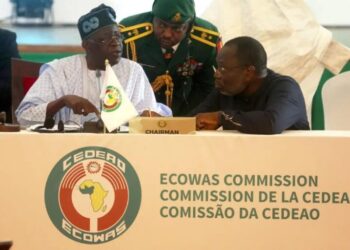
Africa already has an alphabet soup of competing and overlapping trade zones – ECOWAS in the west, EAC in the east, SADC in the south and COMESA in the east and south.
But only the EAC, driven mainly by Kenya, has made significant progress toward a common market in goods and services.
These regional economic communities (REC) will continue to trade among themselves as they do now.
The role of AfCFTA is to liberalise trade among those member states that are not currently in the same REC, said Trudi Hartzenberg, Director at Tralac, a South Africa-based trade law organisation.
The zone’s potential clout received a boost on Tuesday when Nigeria, the largest economy in Africa, agreed to sign the agreement at the summit.
Benin has also since agreed to join.
Fifty-four of the continent’s 55 states have signed up, but only 25 have ratified.
One obstacle in negotiations will be the countries’ conflicting motives.
For undiversified but relatively developed economies like Nigeria, which relies heavily on oil exports, the benefits of membership will likely be smaller than others, said John Ashbourne, Senior Emerging Markets Economist at the Capital Economics.
Nigerian officials have expressed concern that the country could be flooded with low-priced goods, confounding efforts to encourage moribund local manufacturing and expand farming.
In contrast, South Africa’s manufacturers, which are among the most developed in Africa, could quickly expand outside their usual export markets and into West and North Africa, giving them an advantage over manufacturers from other countries, Ashbourne said.
The presidents of both countries are attending the summit.
The vast difference in countries’ economic heft is another complicating factor in negotiations.
Nigeria, Egypt and South Africa account for over 50 per cent of Africa’s cumulative GDP, while its six sovereign island nations represent about one per cent.
“It will be important to address those disparities to ensure that special and differential treatments for the least developed countries are adopted and successfully implemented,’’ said Landry Signe, a fellow at the Brookings Institution’s Africa Growth Initiative.
Regulations governing rules of origin, removal of non-tariff barriers and the development of a payments and settlements system are expected to be unveiled at the summit.