

On March 7, 2017, President Muhammadu Buhari’s government released its much-awaited recovery plan which proposed selling off some of Nigeria’s oil stake in order to raise revenue and drive efficiency.
The Economic Recovery and Growth Plan (ERGP), which is expected to start in 2017 and run through 2020, aims to reduce Nigeria’s stake in joint ventures with Shell, Exxon Mobil, Chevron, Total and Eni, from an average of 55 percent to figures less than 50 percent.
Experts and analysts however believe that the proposal to sell oil assets will not be an easy one for the government, which has a questionable track record on privatisation.
They suggest that the “failed” privatisation of the generation and the distribution chains of the Nigerian power sector may make oil assets unattractive to potential investors.
“Nigeria’s track record on privatization and divestments has not exactly been the best, so people are probably going to greet this news with a certain degree of skepticism and I think rightly so,” Manji Cheto, a West Africa specialist at Teneo Intelligence in London, told Bloomberg.
“I don’t think this is going to be a process that’s speedy.”
SARAKI: POWER PRIVATISATION HAS FAILED
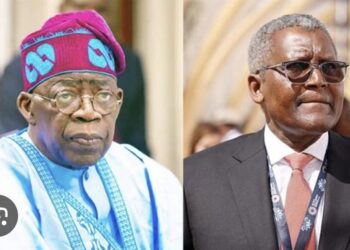
Senate President Bukola Saraki said in February that the privatisation of the power sector in Nigeria has failed, and no one was willing to correct the anomalies.
“There had been errors in the privatisation process and the model by which the power sector is being operated – whether at generation or distribution – will never take us where we need to be,” he had said.
“It has failed and nobody appears willing to tackle the issue head-on in order to bring about a permanent resolution.”
Aliko Dangote, Africa’s richest man, had also called on the government to reverse power privatisation in the country.
“We should be as open as we can if government doesn’t intervene by taking back these assets and giving them to people who really have money that they can really inject, we will not be able to deliver on power,” he had also said.
Though Babatunde Fashola, minister of power works and housing insisted that Nigeria will not reverse power privatisation any grounds, experts believe Nigeria’s attitude of flip flops may affect the sale.
Cheta Nwanze, head of research at Lagos-based risk advisory SBM Intelligence, said “many within the government do not really want to let go of oil assets, but the current reality may be slowly beginning to change that thinking”.
“This proposal represents an adjustment to a new economic normal and not a glowing embrace of market forces,” he told Bloomberg.
MILITANCY AND OIL PRICES MAY STAND IN THE WAY
Militancy in the Niger Delta is also considered as a reason why investors may not be willing to buy into Nigeria’s oil assets.
In 2016, Niger Delta Avengers and a number of militant groups blew up pipelines in the Niger Delta region of the country, cutting Nigeria’s production levels to the lowest in nearly three decades.
“I imagine international oil companies will treat any additional equity stakes offered to them with a healthy dose of caution given the severe production disruptions of 2016 and the fact that the NNPC still owes substantial sums to their venture partners,” said Charles Swabey, an oil and gas analyst at BMI Research.
Investors are said to also fear the fact that an increase in oil prices may change Nigeria’s plan, and the country may abandon the plan to sell oil assets, which would have become more valuable.
“The need to increase government income is the primary motivation for these new proposals, and a return to the good times of higher oil prices and normal Nigerian production will be a formidable disincentive,” Nwanze added.