
* Purse In Pretoria, Dilemma In Abuja
Nigeria’s Statistics Bureau released the October inflation reading, with the headline fallen to 14.06 percent, from 14.63 percent in September, ocassioned majorly by the base year effects alongside price reductions in some commodities.
But some analysts say there may not be cause to cheer yet as pre-election and seasonal spendings, among others may cause inflationary pressures, major concerns at the last Monetary Policy Committee, (MPC) meeting for the year, scheduled for next week in Abuja.
The analysts were unanimous in their submissions that the Central Bank of Nigeria, (CBN) would adopt a cautious approach to monetary easing, while assessing the sustainability of its disinflation trend, hence maintaining the Monetary Policy Rate, (MPR) at 23 percent.
The South Africa’s Central Bank held its key interest rate (ZAREPO=ECI) in a split decision on Thursday, with its governor saying monetary policy was tight enough after two hikes this year.
The decision by the Reserve Bank (SARB) to keep its policy rate unchanged at 7.25% was in line with the overwhelming majority of economists polled by Reuters.
But it was, however, a close call, with three of the seven members of the Monetary Policy Committee favouring an increase of 25 basis points while four wanted no change in the rate.
“The bulk of the data suggested that with the balance of risks we should pause and see what’s happening,” Governor Lesetja Kganyago told a press conference.
The rand , which has fallen sharply over the past two weeks, stayed near its weakest level against the dollar this year after the bank announced the decision.
However, CBN faces a harder call when its 308th Monetary Policy Committee meets on November 23 and 24.
Specifically, CBN cut the MPR by a dramatic 350 basis points, from 26.5% to 23%. Most analysts now expect a hold at 23%, to allow that cut to work through the system before the Christmas spending surge and the build-up to the 2027 general elections.
But some other analysts see the case for easing as tempting, as headline inflation fell from 14.63 percent in September to 14.06 percent in October.The naira has stabilised, and the CBN wants to support growth.
However, the case for caution is stronger, as food inflation was still 19.59% in October, and core month-on-month inflation ticked up.
Indeed, Christmas demand and election-related spending like cash handouts, campaign logistics, food and transport, have historically pushed prices up in Nigeria. A premature cut could undo months of disinflation.
That is why the CBN’s dilemma is deeper than SARB’s. For Pretoria, the 3% target is a matter of credibility, while for Abuja, the 6-9 percent target has become a matter of history.
The CBN has long operated with a single-digit objective, operationally interpreted as a 6 percent to 9 percent band. A recent CBN working paper admits headline inflation has remained “persistently and significantly above this target for most of the period since 2007.”
In practice, it has not been met in any year since 2014. Nigeria last enjoyed single-digit inflation in 2015, before it jumped to 18.5 percent in 2016 on the oil-price crash and naira devaluation. Average inflation was 13.5 percent between 2014 and 2022, among the worst in Sub-Saharan Africa, before peaking at 34.80% in December 2024.
Economists blame structural factors, typified by insecurity in food-producing regions, energy deficits, exchange-rate volatility, weak infrastructure and imported shocks. The Nigerian Economic Summit Group projects single-digit inflation will not fully stabilise until 2029.
Bismarck Rewane, one of Nigeria’s foremost economists and chief executive of Financial Derivatives Company, (FDC) agreed that the nation’s ‘inflation is cooling, but don’t pop the champagne yet!.’
“Food inflation eased to 19.13 percent in October from 19.59% in September, but this may not mean the cost of food prices is easing across the board. Base effects probably helped, while the main cost drivers stayed high. While base effects may have contributed to the decline, major inflation stoking factors remain elevated. For instance, year-on-year, petrol (PMS) prices rose by 48.4% to ₦1,365 per litre, while diesel prices increased by 84% to ₦1,840 per litre,: Rewane stated this in the current FDC, Economic Splash current publication.
According to him, “despite some relief from exchange-rate appreciation, higher petrol and diesel prices continue to raise transportation, distribution, and production costs. However, their full impact on consumer prices could become more evident in the coming months.
Taking a cursory look at the future, he said, “the Christmas season is expected to stimulate consumer demand, particularly for food, potentially adding to inflationary pressures in the coming months. The sharp increase in month-on-month inflation is likely to be a major consideration in the MPC’s deliberations on November 23–24. Consequently, we expect the Committee to maintain the MPR at 23 percent adopting a cautious approach to monetary easing while assessing the sustainability of the disinflation trend.”
Another analyst says the dollar and naira rains from politicians ocassioned by pre-election campaigns may stoke inflation as well as currency pressures with the attendant volatility at the foreign exchange market.
READ ALSO:NNPC Receives C-of-O For Proposed Edo Refinery
“It is unfortunate that even the present administration is allegedly spending cash as if it is seeking for a fresh mandate. Both the state and non state actors have been embarking on spending spree, creating the impression that they have larger warschest to contain any situations and as if the economy is buoyant, while they keep telling the masses to continue to tighten their belts,” he said, while craving for anonymity.
Speaking further, he said, ” I can assure you that the recent signing of the Memorandum of Undstanding, (MoU) by the CBN and the Finance ministry for the coordination of monetary and fiscal policies, for growth, would, at best, be implemented in breach as both the government and opposition parties are ready to spend to either buy votes or influence voting patterns.”
While both countries, seen as economic giants, have been struggling for dominance in both the economic and political space, they have not been able to meet their inflation targets
However, the worrisome aspect is the gaps maintained by both Nigeria and South Africa.
INFLATION ABOVE TARGETS
South African inflation (ZACPIY=ECI) has been above the central bank’s 3% target since March and hit its highest in about 2-1/2 years in October at 5.2% year on year, driven by soaring fuel costs linked to the Iran war
Kganyago said inflation was well contained apart from fuel, with food and goods prices stable, but policymakers would not hesitate to raise interest rates if risks materialised.
“It is unclear how conditions will evolve from here, but we remain committed to steering inflation back to the 3% target,” he continued.
The SARB kept its inflation and growth forecasts largely unchanged for 2026 and 2027.
It joins other emerging market central banks like those of Brazil and Russia in holding rates recently.
The bank’s projection model shows lower rates next year, based on inflation dropping back towards 3%, though it is not seen hitting the target until the third quarter of 2028.
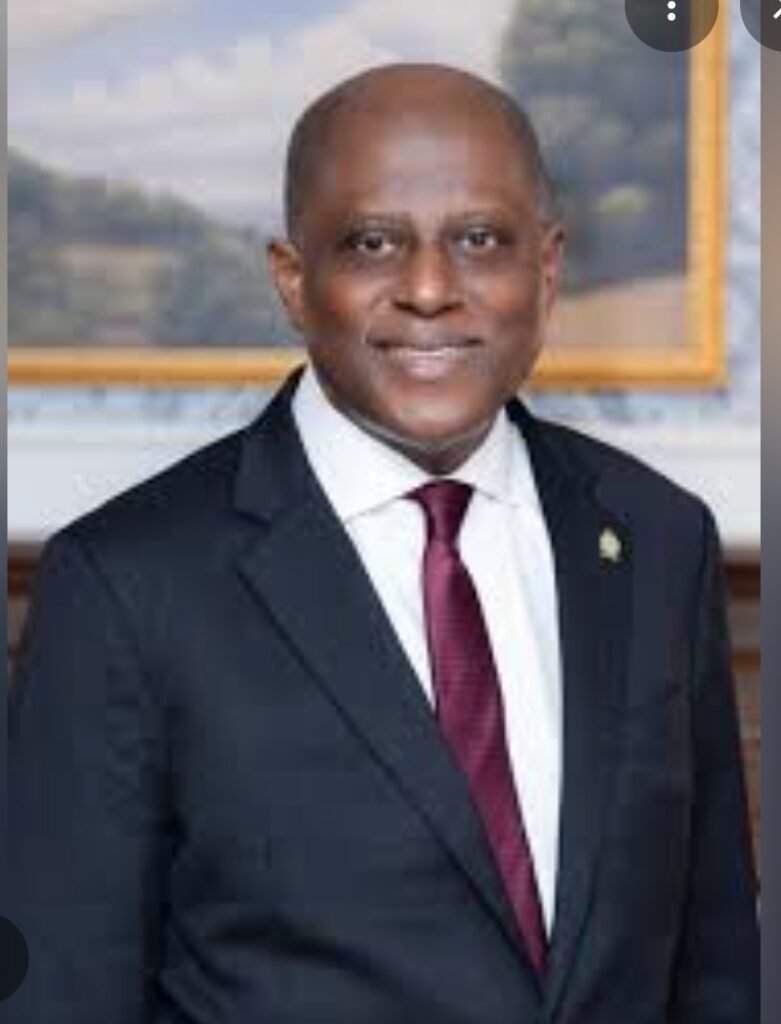
For Pretoria, the 3 percent target is a matter of credibility, but for Abuja, the 6-9 percent target has become a matter of history, missed for a decade, and still out of reach, even as Yemi Cardoso, CBN Governor is determined to break the jinx and create an enduring legacy.
SARB can afford to pause and watch. The CBN cannot afford to get its next move wrong.