
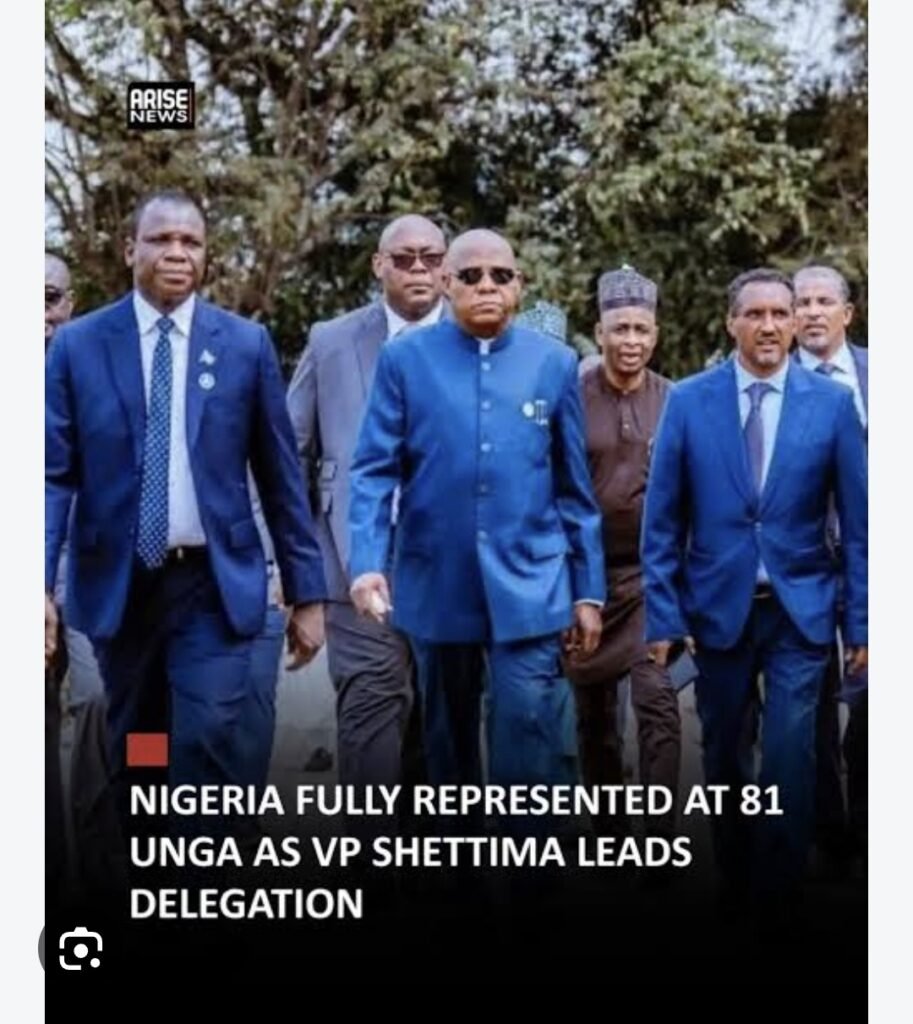
Former Nigerian diplomat, Ambassador Joe Keshi, has described the large number of Nigerians attending the United Nations General Assembly (UNGA) in New York as a waste of resources, while urging the government to take the annual gathering more seriously.
Keshi, who spoke in an interview with ARISE NEWS on Tuesday, said Nigeria needed to participate in the global system but should avoid treating UNGA as a jamboree.
“The large number of people going for UNGA every year from this country is absolutely a waste of resources,” he said.
He, however, stressed that Nigeria’s participation remained important, arguing that the absence of President Bola Tinubu from this year’s UNGA should not overshadow the country’s representation at the gathering.
“There are times in this country that the president of Nigeria or the leaders of Nigeria did not attend UNGA and the heavens didn’t fall,” Keshi said.
“What we need to understand and the most important thing is that as long as a Nigerian delegation or a Nigerian is represented, Nigeria as a country is attending UNGA or the United Nations General Assembly.”
He added: “All these debates that if the president is not there, it’s a big shame or whatever it is, for goodness sake, it’s irrelevant. The most important thing is that Nigeria is represented and if the vice president is there leading the Nigerian delegation, for us, that’s the most important thing we should focus on, that the Nigerian state is represented.”
Keshi also dismissed the significance attached to reports that President Tinubu would have sat beside US President Donald Trump at the General Assembly, describing such claims as a misunderstanding of the UNGA seating arrangement.
YouTube player
“This is why people sometimes don’t respect us and make fun of us. The UNGA sitting arrangement is of a vertical order. Where on earth would Nigeria sit next to you, United States of America? It doesn’t make sense,” he said.
According to him, the focus should instead be on the substantive issues before the General Assembly, including African development and financing, the Sustainable Development Goals, peace and security, and strengthening multilateralism.
“There are eight critical issues of which Africa itself is on the agenda about African development and financing, you know, the sustainable development goals in Africa,” he said.
“And that includes Africa itself, the issues of peace and security around the globe and strengthening multilateralism.”
On whether the United Nations has delivered for Africa, Keshi said the organisation had done the best it could in recent years, but argued that African countries must take responsibility for their own development.
“The United Nations in the last couple of years, in my view, have done the best they can for Africa,” he said.
“But look, the United Nations is an organization. It is the responsibility of African countries and African governments and African leaders to deliver to their people. We shouldn’t be expecting that every other person or organization should be our savior.”
He added: “We are going to be our savior. And it all depends on the quality and the character and the composition of leadership that we have in the African states.”
Keshi also rejected the argument that Nigeria could lose important diplomatic or bilateral deals because the president was not physically present at UNGA, saying such engagements could be conducted at the bilateral level.
“I can’t see and I can’t remember any deal that was made at some of these events that we can, that we did not do or cannot do at the bilateral level,” he said.
“The most important thing for us is our bilateral engagement, our, you know, understanding of how the world works and our concentration on those in a position to help us and how we relate and how we accept those assistance for the betterment of our own country.”
According to him, the presence of Vice President Kashim Shettima in New York meant that Nigeria would still be able to engage with other leaders and pursue agreements.
“As long as the vice president is in New York, they can also make any deal. It does not make a difference,” he said.
“And we have a number of officers and ministers on the ground to make any deal that is good for the country.”
On Vice President Shettima’s address to the General Assembly, Keshi said he expected him to focus on Africa’s development and security.
“I sincerely hope that he will speak to the issues and more importantly, speak to the issue of security, particularly with reference to Africa,” he said.
He also urged the vice president to avoid presenting Nigeria’s bid for a permanent seat on the UN Security Council as an entitlement.
“And I’m praying that he will avoid some of the statements he made last year by insisting that Nigeria must be at the Security Council. No, it’s not a must. It’s something that has to be negotiated. It’s something we have to work for. It’s something we have to agree about African representation,” Keshi said.
Keshi said he was also looking forward to US President Donald Trump’s address, noting that the US president traditionally attracts significant attention at the General Assembly.
“The only president that I have seen that attracts attention to UNGA and the hall is filled up in the past and currently have been the United States president,” he said.
He further observed that attendance at the General Assembly hall often declines after the US president delivers his address.
“After the United States president speaks and leaves, you know, the podium, look, virtually, if you look at the pictures coming out from the conference, I mean, from the General Assembly hall itself, you will discover that most of the hall itself is relatively empty,” he said.
Keshi maintained that Nigeria should reduce the size of its delegation while retaining meaningful participation in the global forum.
“We have a responsibility to be part of the global system. We have a responsibility to participate at these conversations,” he said.
“But look, we must take them seriously and not think that it’s a jamboree that everybody, you know, all over the country, you know, people are rushing to be at UNGA.”
He recalled that Nigeria had previously sent a large delegation in 1999 following the return to civilian rule, saying the meetings organised around that period were worthwhile.
“I can remember that we never had such a large delegation, except of course, I remember one in 1999, I think when, you know, after the euphoria of a return to military rule, you know, there was a lot of things organized around democracy,” he said.
“There was a lot of things organized around, you know, the new president at that time, President Obasanjo and the rest of it. And there were a lot of meetings that took place. Yeah, that was worth it. I can claim that that was worth it.”
He noted that specific summits are also organised for heads of state during the General Assembly period.
“There’s also a time in the General Assembly that specific meetings are organized for the heads of state. It’s called summits within the UNGA period,” Keshi said.
“Heads of state can attend those ones and so on.”
Responding to concerns over fiscal discipline and the cost of governance, Keshi said Nigeria still had significant challenges in that area.
“You know that fiscal discipline is not a hallmark in this country. So you know that very well,” he said.