
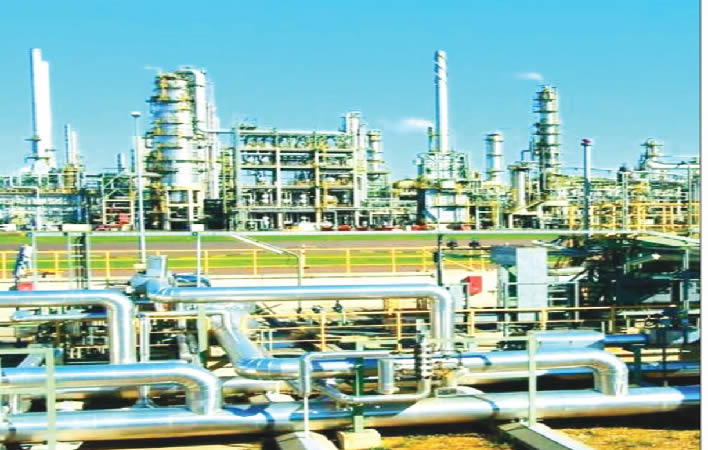
Nigeria’s Dangote Refinery, the largest on the continent, is expected in October to seek to raise around $5 billion in Africa’s biggest IPO listing yet, after months of strong earnings, boosted by the disruption caused by the Iran war.
But, for the potential investors, the question is whether Dangote, majority-owned by Africa’s richest man, Aliko Dangote, can avoid squeezing its profits while sourcing enough crude oil for its plans to double capacity within three years, in part funded by the initial public offering.
“If Dangote’s only supplier of oil is Nigeria … this does increase the risk of the refinery as an investment,” Rob Thummel, senior portfolio manager at U.S.-based Tortoise Capital Management, said.
Dangote does not disclose its margins, but as a whole the refining industry has benefited from higher profits since the disruption in the Middle East increased demand for alternative sources of fuel.
Dangote was particularly well-placed to meet demand across Africa and beyond. A new, efficient refinery, it reached its initial maximum capacity of 650,000 barrels per day in February, just before U.S.-Israeli attacks launched the war on Iran.
The refinery has already tested production at 700,000 barrels per day.
It is also working on diversifying its sources of crude.
THE COMPLICATIONS OF BUYING NIGERIAN CRUDE
Ideally, Dangote would rely on domestic oil, especially when Nigeria, with output of 1.6 million bpd, is Africa’s biggest producer.
The reality is that much of Nigeria’s state oil firm the Nigerian National Petroleum Company Limited’s joint‑venture crude is tied to oil-backed loans and pre‑export deals, reducing the amount it has available for Dangote.
The NNPC does not disclose its obligations, but David Bird, chief executive of the Dangote refinery, told Reuters imports account for about 30% to 40% of crude intake.
The problem is one of economics as well as of availability.
READ ALSO:Amid Liquidity Concerns, CBN Sells N700 bn Treasury Bills Today In Second August Auction
“Challenges in accessing feedstock at competitive prices would increase costs and compress margins and utilisation rates, impacting the refinery’s commercial performance and therefore its valuation,” said Mikolaj Judson, analyst at risk consultancy Control Risks.
The crude Dangote buys from other African countries, as well as more distant producers, including the United States and Guyana, is priced in dollars.
Some domestic Nigerian crude is priced in naira, but is still expensive, Dangote says, as the NNPC prices Nigerian crude against international benchmarks such as Brent that include freight and logistics costs even though domestic refiners do not incur them.
Group Vice President of Dangote Industries Limited Edwin Devakumar told Reuters that certain Nigerian cargoes were more expensive than comparable imports without giving precise figures.
The grades Dangote has imported include U.S. WTI Midland crude, which has generally traded above Nigerian grade Bonny Light in 2026, according to S&P Global Energy Platts data.
Nigerian authorities say they are seeking to improve the flow of local crude.
Oritsemeyiwa Eyesan, chief executive of regulatory body the Nigerian Upstream Petroleum Regulatory Commission, said authorities were exploring a crude swap system that would match refiners with local producers to reduce delivery times and ease logistics.
Dangote’s coastal location, meanwhile, gives it flexibility to import supplies.
“The main risk is the cost of importing these barrels,” Wood Mackenzie analyst Alan Gelder said.
Bonny Light mostly cheaper than WTTI