
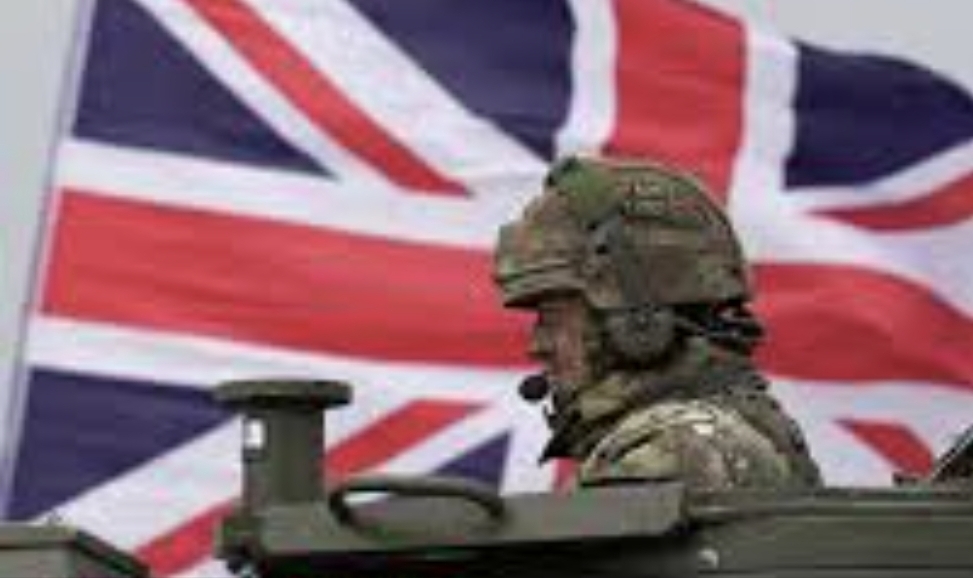
A spokesperson for Iran’s Revolutionary Guards said on Saturday that Britain would become a “definite and legitimate target” if it supported the U.S. in any war with Tehran, according to Iranian state broadcaster IRIB.
READ ALSO:Fresh Controversy Erupts Over Late Abacha’s Final Moments As Former Aid, Al-Mustapha Rejects Viral Claims
The spokesperson said any country, including Britain and Gulf states, that backed the U.S. in a conflict would be considered a legitimate target, adding that U.S. bombers had recently used British airfields.
But Britain said its armed forces were ready to protect the country from any attack after Iran’s IRGC issued a warning not to allow U.S. bombers to fly from UK bases.
In a statement Thursday, the IRGC said the U.S. had flown bombing missions against Iran from Fairford in southwest England, adding that any base used to launch such attacks would be a legitimate target.
The new British prime minister, Andy Burnham, was notified last week that London had re-committed to an existing agreement allowing the United States to use British bases for what it described as the collective self-defence of the region.
“Our armed forces are ready to keep the United Kingdom safe from any kind of attacks, whether it’s on our soil or from abroad,” a government spokesperson said.
“This includes through operating a layered approach to air and missile defence, provided by Royal Navy, British Army and Royal Air Force assets equipped with a range of advanced capabilities, working closely with our NATO allies.”
BRITAIN AGREES TO SUPPORT U.S. DEFENSIVE OPERATIONS
The government said on Wednesday that the existing arrangement covered U.S. defensive operations to degrade missile sites and capabilities used to attack ships in the Strait of Hormuz.
In response to Iran’s warning, the spokesperson said Britain’s approach remained unchanged and that it was committed to defending its people, interests and allies in accordance with international law while avoiding being drawn into a wider conflict.
The United States carried out a 13th consecutive night of attacks on Iran following the effective collapse of an interim truce, and Tehran fired at U.S. bases in neighbouring Arab countries.
In March, Iran was reported to have fired two ballistic missiles at the U.S.-UK military base on Diego Garcia in the Indian Ocean, neither hitting the target.
An Iranian-type Shahed drone caused slight damage on March 2 when it hit facilities at Britain’s Akrotiri airbase in southern Cyprus. Britain later said the site would not be included in the defensive agreement with the U.S.
Experts say Iran might possess a missile able to strike London, but it was likely to be inaccurate and the risk was low.
Britain has long accused Iran of carrying out cyberattacks and using criminal gangs and proxies to target opponents and dissidents in the UK. The security services said there had been 20 potentially lethal Iranian-backed plots in the last year.
Britain this month banned support for the IRGC by using new powers brought in to address what it said was a growing use of state-sponsored proxies.
It also followed a spate of attacks on Jewish sites in London. The government said the IRGC had “almost certainly” directed a group believed to be responsible for a number of these.
Two Romanian nationals, who prosecutors said had been acting for Iran, were jailed this month for stabbing a journalist working for a Farsi-language media group in London.
Tehran has always denied involvement in such attacks, calling allegations to the contrary unfounded and politically motivated.