
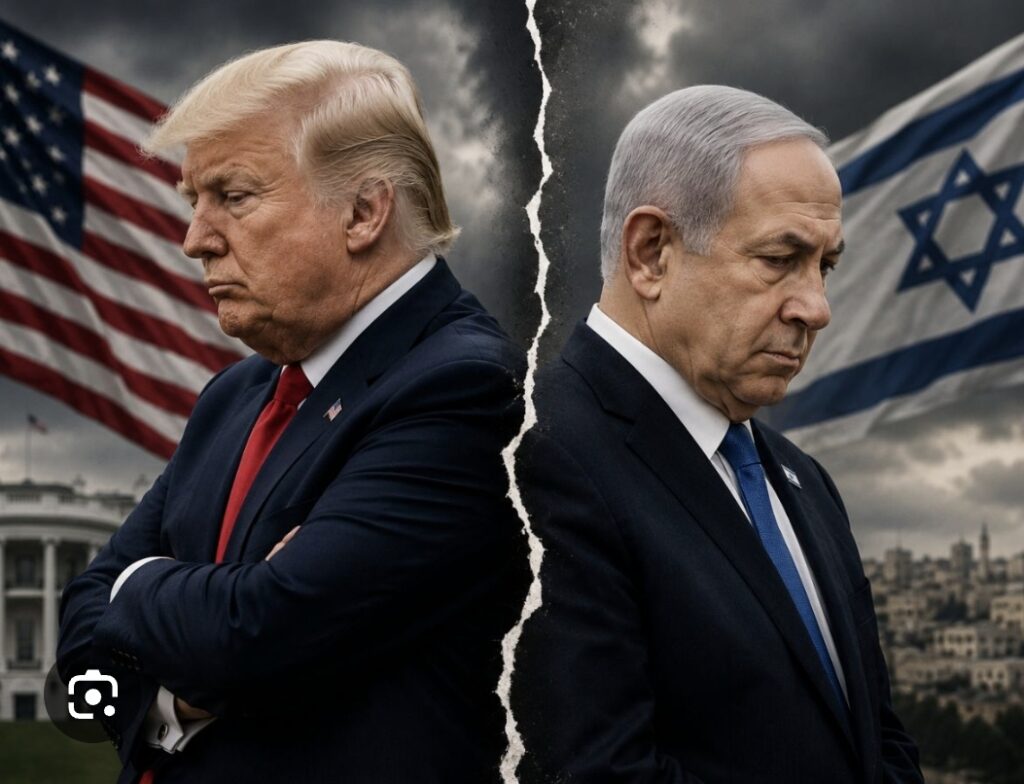
Israeli Prime Minister Benjamin Netanyahu and US President Donald Trump appear increasingly divided over the future of the conflict involving Iran, after Washington and Tehran reached a preliminary understanding designed to halt military operations and pave the way for broader negotiations.
The proposed arrangement would establish a 60-day ceasefire period during which the United States and Iran are expected to negotiate a longer-term agreement addressing concerns surrounding Tehran’s nuclear activities and regional security issues.
While the White House has presented the deal as a pathway toward stability, Israeli officials reportedly view the development with deep concern, arguing that it leaves key security questions unresolved and could restrict Israel’s ability to respond militarily if threats emerge.
Several Israeli officials, speaking anonymously, expressed dissatisfaction with the framework, describing it as unfavorable to Israel’s strategic interests. They fear that the negotiation period could be prolonged beyond the initial timeline, limiting Israel’s freedom of action while diplomatic talks continue.
Relations between Netanyahu and Trump have reportedly been strained in recent weeks, particularly over Israel’s military operations in Lebanon and its campaign against Iran backed Hezbollah forces. Washington has repeatedly pushed for restraint as it seeks a diplomatic breakthrough with Tehran.
Despite those differences, Netanyahu has sought to avoid a public confrontation with Trump, acknowledging that while the two leaders often agree, there are occasions when their positions diverge.
Speaking in Jerusalem, the Israeli leader insisted that safeguarding Israel’s security remains his foremost responsibility and reiterated that his government would continue taking necessary measures to protect its citizens.
The emerging agreement is expected to be formally signed in Switzerland later this week. Mediators involved in the process have indicated that the accord calls for a cessation of military activities across multiple fronts, including Lebanon.
However, Netanyahu has maintained that Israeli forces will remain in southern Lebanon and retain the ability to respond to attacks by Hezbollah if necessary.
The deal would also reopen critical shipping routes in the Gulf region while leaving broader questions regarding Iran’s nuclear programme to be addressed during subsequent negotiations.
Israeli officials have expressed concern that issues such as Iran’s missile programme and support for armed groups across the Middle East may not be fully addressed in the upcoming talks, despite being central justifications for previous military action.
The development comes at a politically sensitive moment for Netanyahu, who faces elections later this year and has long highlighted his close relationship with Trump as a cornerstone of his leadership credentials.
Political analysts suggest the agreement could complicate that narrative, particularly if Israeli voters perceive that Washington’s diplomatic approach is at odds with Jerusalem’s security priorities.
Recent polling indicates declining confidence among Israelis in Trump’s commitment to their country’s security, adding another layer of uncertainty as negotiations move forward and regional leaders weigh the implications of a potential long-term