
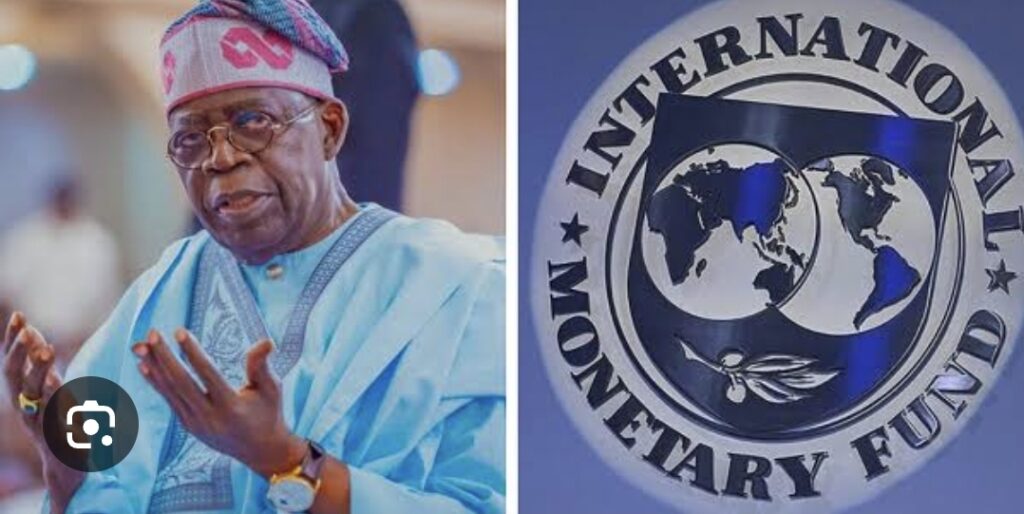
The IMF on Tuesday warned of risks surrounding Nigeria’s plan to borrow up to $5 billion through a derivatives agreement with First Abu Dhabi Bank, saying such transactions are often opaque and complex.
The IMF’s concerns, according to Reuters, were contained in comments by its Nigeria mission chief, Christian Ebeke, during a briefing on the Fund’s latest Article IV consultation, which otherwise praised the country’s recent economic reforms for improving macroeconomic stability and investor confidence.
Nigeria’s Senate in April gave its approval to the agreement, joining other Africa borrowers like Senegal and Angola who have tapped similar arrangements over the past year.
“Our view is that the transaction in these types of structures carry risks. Usually they are opaque so the terms are not always very transparent when we reviewed these instruments across countries,” Christian Ebeke, IMF mission chief in Nigeria told reporters.
Ebeke said Nigeria could instead issue eurobonds to finance its deficits or other means to raise funding, including on concessional terms.
Nigeria intends to use proceeds from the total return swap, or TRS, to refinance expensive debt and pay for infrastructure.
In its latest Article IV review, the Fund praised Nigeria’s sweeping reforms, saying they had strengthened economic stability and investor confidence, but warned that the benefits had yet to reach millions of citizens and could be undermined by global shocks, including the Middle East conflict.
The reforms since 2023 under President Bola Tinubu – including fuel subsidy removal, tighter monetary policy and exchange rate liberalisation – had rebuilt buffers and improved macroeconomic management, the IMF said.
However, it cautioned that the reforms were also contributing to social strain, with poverty levels at 63% and millions facing food insecurity, underscoring a widening gap between macro gains and household realities.
The IMF said improved policy credibility and forex reforms had helped Nigeria regain access to international capital markets and attract portfolio inflows, while reducing risk premiums. The central bank says gross reserves are at $50 billion, the highest in 17 years.
But reliance on volatile foreign portfolio investment poses rollover risks, the IMF said, urging a shift towards more stable, long-term capital such as foreign direct investment.
Analysts have raised concerns about about the rising external reserves, ocassiined by what they call ‘hot money’ , warning that the investors who are attracted by higher yields on instruments like Treasury Bills could withdraw their funds overnight, creating problems for the economy.
According to the Fund:
Economic reforms since 2023 have improved policy credibility.
Foreign exchange reforms have helped restore investor confidence.
Nigeria has regained access to international capital markets.
Portfolio investment inflows have strengthened.
READ ALSO:Iran, Israel Exchange Fire In First Clash Since Truce
Risk premiums have declined.
Gross external reserves have risen to around $50 billion, their highest level in 17 years, according to the Central Bank of Nigeria.
However, the IMF warned that reliance on short-term foreign portfolio inflows exposes the economy to rollover and external financing risks.
The IMF’s warning reflects broader concerns about the growing use of structured sovereign financing arrangements across emerging and frontier markets. Unlike traditional sovereign bonds, derivative-based transactions can involve complex contractual terms, contingent liabilities, and repayment structures that may not be immediately visible to investors or policymakers.
The Fund also highlighted that while Nigeria’s reforms are yielding macroeconomic gains, many households are yet to experience the benefits.
According to the IMF:
Poverty levels remain around 63%.
Millions of Nigerians continue to face food insecurity.
Global shocks, including the ongoing Middle East conflict, could undermine reform gains by increasing inflationary pressures and fiscal risks.
The conflict has contributed to volatility in global energy markets and heightened uncertainty over commodity prices, creating both opportunities and risks for oil-exporting economies such as Nigeria.
According to the IMF, more than 27 million Nigerians faced food insecurity during the year.
“Strong reforms over the past three years have yielded improved macroeconomic outcomes and built resilience. Still, conditions for many Nigerians remain difficult. Poverty reached 63 percent (national poverty line) and 27 million Nigerians are estimated to have faced food insecurity in the fall of 2025,” the IMF said in a statement after its annual review of the Nigerian economy.
The poverty level in the country has been on the rise for years, with the World Bank reporting last that about 61 percent of the country’s population lived in poverty, up from 40 percent in 2019.
According to the latest official figures, inflation accelerated to an annual rate of 15.7 percent in April, a five-month high.
Analysts attributed the increase partly to higher fuel prices linked to the ongoing war in the Middle East.
Economic growth is projected to reach 4.1 percent this year, after four percent in 2025.
The IMF warned that while higher costs of food, fertiliser and fuel could boost Nigeria’s revenues — the country is Africa’s largest oil producer — they could also intensify inflationary pressures on poor households, “potentially aggravating poverty and food insecurity”.
IMF’s statement comes less than a year before Nigeria heads to the polls in January, as President Tinubu seeks re-election for a second term.