
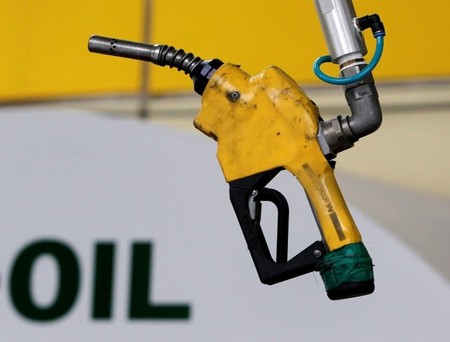
Nigeria imported £1.1 billion worth of refined oil from the United Kingdom in the 12 months ended December 2025, underscoring the country’s continued dependence on imported petroleum products despite ongoing efforts to strengthen domestic refining capacity.
The latest Trade and Investment Factsheet released by the UK Department for Business and Trade showed that refined oil remained the dominant UK export to Nigeria during the review period, accounting for 60.5 per cent of all goods exported from the UK to the country.
The report also showed that the value of refined oil exports to Nigeria increased by 9.4 per cent compared with the preceding year, highlighting sustained demand for imported fuel products even as Nigeria ramps up local refining operations.
The development comes amid efforts by the Federal Government to reduce reliance on imported petroleum products through increased local refining output, including supplies from the Dangote Petroleum Refinery and the rehabilitation of state-owned refineries.
A breakdown of UK exports to Nigeria revealed a significant concentration in petroleum-related trade, with refined oil exports valued at £1.1 billion dwarfing every other export category.
The second-largest export category from the UK to Nigeria was toilet and cleansing preparations, valued at £70.2 million and accounting for just 4.0 per cent of total goods exports. Textile fabrics followed at £45.7 million, while general industrial machinery and beverages and tobacco contributed £42.2 million and £34.6 million respectively.
The figures indicate that refined petroleum products alone generated more export revenue for the UK than the combined value of the next four largest export categories to Nigeria.
Overall, UK goods exports to Nigeria stood at £1.8 billion in the four quarters to the end of Q4 2025, meaning refined oil contributed roughly three out of every five pounds earned from British goods sold to Nigeria.
The strong demand for refined petroleum products also supported broader trade growth between both countries during the period.
According to the report, total trade in goods and services between the UK and Nigeria rose to £7.6 billion in the four quarters to December 2025, representing an increase of 10.8 per cent, or £737 million, compared with the corresponding period in 2024.
UK exports to Nigeria increased by 10.5 per cent to £5.5 billion, while imports from Nigeria rose by 11.3 per cent to £2.1 billion.
Services remained the largest component of UK exports to Nigeria, accounting for £3.7 billion or 67.7 per cent of total exports, while goods exports stood at £1.8 billion, representing 32.3 per cent.
The UK also recorded a trade surplus of £3.3 billion with Nigeria during the review period, up from £3.0 billion recorded a year earlier.
The report ranked Nigeria as the UK’s 38th largest trading partner globally in the four quarters to the end of Q4 2025, accounting for 0.4 per cent of total UK trade.
Nigeria also emerged as the UK’s 28th largest export destination and 48th largest import source during the period.
Historical data contained in the report showed that bilateral trade relations between both countries have strengthened steadily over the past decade.
Total UK-Nigeria trade increased from £6.8 billion in 2024 to £7.6 billion in 2025, while UK exports to Nigeria rose from £4.9 billion to £5.5 billion over the same period.
The UK further expanded its share of Nigeria’s import market, with its overall market share rising to 10.9 per cent in 2024 from 9.7 per cent in 2023.
Similarly, the UK’s share of Nigeria’s goods imports increased to 5.1 per cent from 4.1 per cent recorded a year earlier.
The latest trade data comes as the Federal Government intensifies engagement with British investors and businesses.
Nairametrics earlier reported that the Nigeria Investment Promotion Council (NIPC), on behalf of the Federal Government, engaged experts from 30 United Kingdom companies to advance trade and investment agreements reached during President Bola Tinubu’s State Visit to the UK in March.
The engagement followed the UK’s first trade and investment mission to Nigeria since the State Visit and was aimed at translating high-level bilateral agreements into practical business opportunities for companies in both countries.