
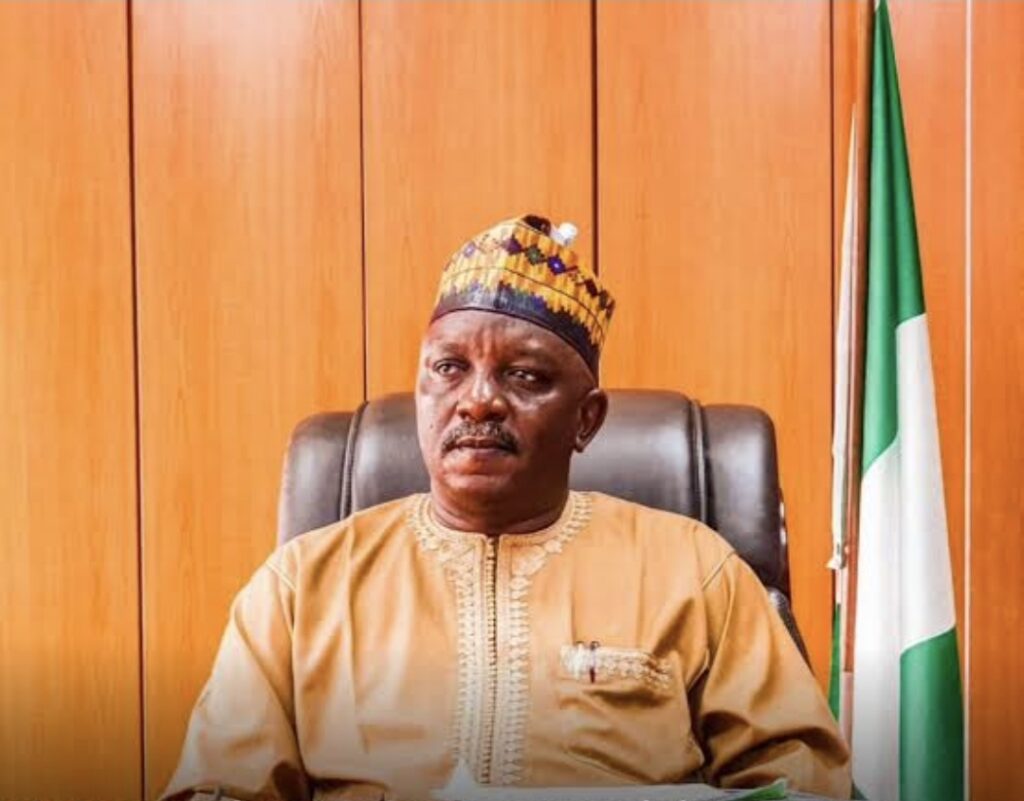
The 75-year prison term handed to former Power Minister Saleh Mamman on Wednesday, May 13, 2026, underscores a hard truth for Nigeria’s private sector: corruption in energy infrastructure directly translates to higher operating costs and lower competitiveness.
The prosecution detailed how money allocated to two of Nigeria’s most strategic energy projects were looted at a time when the country’s electricity shortfall continues to limit economic output and disrupt daily life and livelihoods.
The judgment is being described by analysts as one of the most significant convictions in the power sector to date
Specifically, the court found that funds meant for the projects were diverted, leaving two projects critical to industrial power supply stalled.
For manufacturers, SMEs, and foreign investors weighing Nigeria, the case reinforces a key risk factor — that capital allocated to fix the power gap can vanish before a single megawatt is delivered.
Until that risk is addressed, they argue, the cost of self-generation and unreliable supply will continue to erode margins and deter expansion.
For many Nigerians, the verdict confirms a long-held suspicion: that the gap between government promises and public reality is widened by elite impunity.
Each megawatt lost to theft is another hour of darkness for households and businesses struggling to survive.
Coming at a time when Nigeria’s chronic power shortfall continues to cripple economic output and daily life, they further argue that his prosecution has revealed the human cost of high-level corruption.
Analysts say the case lays bare a pattern of looting tied to the two of the country’s most strategic energy projects meant to light up the nation but instead became conduits for diversion.
However, the sentence is being read as both a rare act of accountability and a reminder of how deep distrust runs between the governed and those entrusted with public funds.
The conviction and lengthy sentence for Mamman mark a rare moment when a former minister, living or dead faces the full weight of the law over energy sector graft.
Yet for citizens living with erratic power and rising costs, the trial raises uncomfortable questions about how many more cases go unseen.
The looting, they say underscores a culture of impunity that fuels public disillusionment. In the eyes of many, the widening gulf between government rhetoric and live experience is the real sentence Nigerians have been serving for decades.
Metrobusinessnews.com (MBN) had in 2023, published a ‘Special Report: Inside Nigeria’s Power Ministry Of ‘Monumental Frauds’, and raised concerns on the brazen looting at most Ministries, Departments and Agencies, (MDAs), with specific reference to the power ministry, which was a product of the deconsolidation of the former three Ministries under Babatunde Fashola by the late president Muhammedu Buhari, when it was obvious that he was not going to deliver on his promises of steady power supply, among.others and assigned to Mamman Saleh as the minister.
Highlights of the detailed special report included the fact that the then president was held captive by statist ideology, rather than sound economics, as the
Permanent secretaries, which he claimed were more reliable then became his albatross.
READ ALSO:Special Report: Inside Nigeria’s Power Ministry Of ‘Monumental Frauds’
It was revealed that some MDAs harboured super permanent secretaries and Directors, who had created their own fiefdoms and also that some power equipment supposed to have been brought in from Europe at an extra cost of $250m, instead came from China to save cost on inferior equipment
It was also discovered that the frauds were perpetuated typically by the principal officers, including the supervisory minister, who remains the nominal accounting officer, the permanent secretary with tremendous power and in most cases seen as a ‘super permanent secretary or Director-General’ and directors who have created fiefdoms, depending on their portfolios or departments.
The Director of Finance and Administration, (DFA), who was the most influential of the league of three, was the arrowhead and the one for the power ministry was in and out of derention at the Economic and Financial Crimes Commission, (EFCC), but always boasting that, he would never stay longer in the agency’s detention
Nigerians are calling on EFCC to beam searchlight on the super permanent secretaries and directors and possibly extend to other MDAs.
The analysts were unanimous in their submissions that the mouthed legislative oversight by the National Assembly was a cplete filire inview of alleged pervasive leakages in the said MDAS
Justice James Omotosho of the Federal High Court in Abuja sentenced Mamman after finding him guilty on all 12 counts filed by the EFCC, the agency said in a post on X.
The EFCC charged Mamman with laundering 33.8 billion naira through private companies, funds that prosecutors said were proceeds of unlawful activity linked to government-financed hydroelectric projects, including the Mambilla and Zungeru power plants.
Mamman, who served as minister of power in 2019, was sentenced in absentia under the law. The court ordered Nigerian and international security agencies to arrest Mamman and hand him over to correctional authorities to serve his sentence.
The country has long grappled with high-profile corruption cases involving public officials, with the EFCC tasked with prosecuting financial crimes. The Mamman case centers on funds meant for critical power infrastructure projects in Africa’s most populous nation, where electricity shortages remain widespread.