
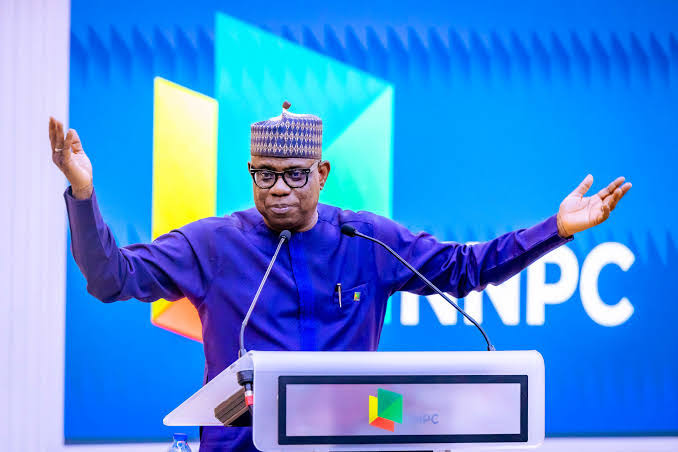
The federal government, through the National Petroleum Company Limited, (NNPCL) has signed a Memorandum of Understanding (MoU) with two Chinese companies to revive and expand the moribund Warri and Port Harcourt refineries.
The two companies are believed to have gulped billions of dollars public funds without producing a meaningful drop in refined fuel output.
Although tongues are wagging over continued expenditure on the moribund refineries, the Warri and Port Harcourt, like the other ones, have gulped billions of dollars and naira through the claimed turnaround maintenances as well as salaries and entitlements to redundant workers, some analysts say the current step could be regarded as the most concrete one, yet by the government enterprise, under engr. Bashir Bayo Ojulari, as the Group Chief Executive Officer to turn those ghost assets into working infrastructure.
They also consider it as symbiotic relationship and strategy toward bringing Chinese industrial capital into a sector that seems to have defied solutions by successive administrations.
Metrobusinessnews.com (MBN) gathered that the MoU was executed in Jiaxing City, China, on April 30, 2026, by Ojulari; Chairman of Sanjiang Chemical Company, Guan Jianzhong, Chairman of Xinganchen (Fuzhou) Industrial Park Operation and Management Co. Ltd, Bill Bi.
In the reckoning of NNPC, the proposed partnership framework is expected to cover the completion of pending rehabilitation work at both refineries, as well as their operation and maintenance, with a focus on achieving efficient and sustainable performance.
It added that planned upgrades would improve product quality and enhance profitability.
The company further stated that the collaboration would also extend to expanding petrochemical capacity and unlocking broader gas and downstream opportunities through the development of industrial hubs.
“The potential collaboration also contemplates expanding the refineries’ petrochemical capacities and harnessing gas and downstream opportunities through the development of co-located, gas-based industrial hubs,” the statement by the Nigerian company reads in part.
Ojulari described the agreement as a key milestone after months of engagement between NNPC and the Chinese partners, noting that it signals growing alignment on the future of Nigeria’s refining assets.
“All parties recognise mutually beneficial opportunities for the development and long-term sustainable profitability of NNPC’s refining assets in Nigeria, and the collective weight required for success,” Ojulari noted.
He added that the agreement represents a major step towards securing technical equity partners needed to restart and expand the refineries, while also exploring opportunities in petrochemicals and gas-based industries.
READ ALSO:UBA Pushes Deeper Bank-Fintech Collaboration At Pan African Conference
Together, both companies carry a combined nameplate that is capable of reducing the country’s dependence on imported refined products, if fully operational and properly managed.
Ojulari decried the years of operations of the firms with the attendant wastages, through their rehabilitation contracts recycling, contracting and budgeting lines without any results.
“All parties recognise mutually beneficial opportunities for the development and long-term sustainable profitability of NNPC’s refining assets in Nigeria, and the collective weight required for success,” said Ojulari.
Under the terms outlined Monday, the partnership would cover completion of outstanding construction and engineering work at both sites, followed by ongoing operation and maintenance aimed at what NNPC called “best-in-class, sustainable performance.”
The framework also contemplates upgrades to push both facilities toward cleaner fuel standards and more profitable product slates, a tacit acknowledgement that Nigeria’s refining infrastructure has lagged behind regional and global regulatory trends.
NNPC said the potential collaboration extends to expanding petrochemical capacities at both sites and developing co-located, gas-based industrial hubs, an industrial clustering model that China has deployed successfully in its own special economic zones and that Nigeria has struggled to replicate.
Ojulari, who took the helm of the state oil company last year and has moved quickly to restructure its refining strategy following the bruising failure of previous rehabilitation attempts, framed the MoU as the product of sustained bilateral effort rather than a rushed diplomatic gesture.
However, industry analysts say, despite the hype by Ojulari, the agreement carries the familiar language and nuances familiar to anyone who has tracked Nigeria’s long history of refinery announcements.
For instance, NNPC described the MoU as reflecting “shared intent to progress discussions in good faith,” with the analysts insisting that in a sector where letters of intent and framework agreements have a poor record of converting into operational outcomes, they are waiting with bated breath for concrete milestones and achievements as scheduled