
Over three years after the promised stable power supply, and few days after public apology to Nigerians over persistent electricity outages and several grid collapses, the federal government of Nigeria says power generation will recover to previous levels within two weeks
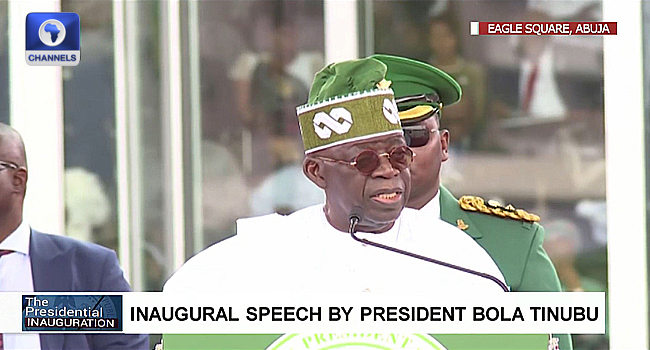
President Bola Tinubu, seeking for second term in the presidemtial election for January 2027, had in 2022 promised stable electricity during his campaign, without which he should not be voted for reelection.
However, Adebayo Adelabu, minister of power recently acknowledged, just like most Nigerians have been complaining of lack of power, the inability of the government to live up to its promise and had to apologise to Nigerians over the persistent electricity outages that have affected homes, crippled businesses and industries across the country.
Curiously, the Chief Technical Adviser to the Minister, Adebayo Olowoniyi, has said Nigerians should rather begin to see gradual improvement in electricity supply as maintenance work on a major gas pipeline approaches completion.
Olowoniyi stated this on Thursday while appearing on Arise Television, monitored by metrobusinessnews.com (MBN), noting that full restoration of gas supply to power plants is expected within the next two weeks.
Rather owning up and being remorseful for the excruciating heat and loss of businesses and fortunes by Nigerians, ocassioned by the obvious failure of the minister, Olowoniyi defended, what analysts regard as ‘talk show apology’ and rather insisted that the action demonstrated leadership rather than an admission of personal responsibility.
“I think, first of all, I’d like to start with the apology from the Honourable Minister, which we believe is all about taking leadership in the sector,” he said.
“Not necessarily directly his fault for the challenges that we have, but as the Minister of Power, he just took—it was the right leadership step to say, okay, I take ownership of this issue, and I’m going to profer a solution that would ensure power supply comes back in the shortest available time.”
Olowoniyi explained that the recent electricity shortages were largely caused by maintenance work on a key gas pipeline that supplies fuel to several power plants.
According to him, Nigeria’s electricity generation is heavily dependent on gas.
“One of the major gas pipelines in Nigeria was undergoing maintenance, and gradually that process is being completed,” he said.
He added that once gas pressure is fully restored, power plants would be able to resume production at their previous levels.
“We’re sure that within the next two weeks, full gas pressure will be back on the gas pipelines, and the power plants will be able to get enough gas at least to go back to their level of generation that they had in the last two to three months,” he said.
The power ministry official expressed optimism that signs of improvement had already begun to emerge.
“I would already say that from yesterday, we would have gradually started to see some improvement as the pressure on the pipeline gradually starts to build up, and we will see continuous improvement over the next couple of weeks,” he said.
Earlier on Tuesday in Abuja, Adelabu told Nigerians that the outages were caused by factors beyond the government’s immediate control, however, he assured that power supply would improve soon.
“I can tell you, with the committee that we have set up, and commitments from gas suppliers, and the timeline for repair of the gas pipelines, two weeks from now we should start seeing improvements in supply,” the minister said.
He also reiterated the Federal Government’s plan to increase electricity generation to 6,000 megawatts before the end of 2026, describing the current situation as a temporary disruption.
For some months now, Nigerians across the country have been facing blackouts and unstable power supply amid the increasing heat in the country, a development that has triggered attacks on social media.
The Nigerian Integrated System Operator and electricity distribution companies had blamed gas shortages, leaving them to struggle with between 2,000 megawatts and 3,900 MW.
Nigeria’s power generation companies recently shut down several gas plants over lingering power sector legacy debt amounting to over N6.8 trillion.
Adelabu had targeted a 6000 MW electricity supply for Nigeria. He had already missed the 2025 target.