
.
*Protests As Bandits Abduct 6 In Kaduna Community
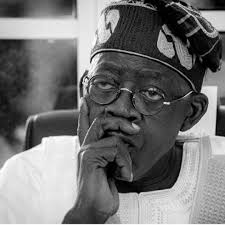
President Bola Tinubu on Monday painted a gloomy picture of the security situation in the country saying terrorism is giving him and other Nigerians sleepless nights.
He was, however, quick to declare that Nigeria will defeat terrorism and banditry, describing the security threats as unacceptable and alien to the nation’s core values.
as Bandits Abduct 6 in Kaduna Community
However, residents of Danhono II in Millennium City, Chikun Local Government Area of Kaduna State, on Monday staged a protest following the abduction of six residents by suspected bandits.
The incident occurred in the early hours of Monday at about 12am, when gunmen reportedly invaded the community and abducted six persons from the area.
Daily Trust gathered that the abduction sparked outrage in the community, prompting youths, women and other residents to march to the divisional police office to register their complaints over the worsening security situation.
A video clip circulating on social media showed youths lamenting what they described as the return of kidnapping activities in the area.
Speaking while declaring open the Second National Economic Council (NEC) Conference at the State House Conference Centre, Abuja, Tinubu assured Nigerians of his administration’s resolve to strengthen the country’s security forces and restore peace across affected communities.
He said: “I promise you here that I’ll play my part. Seven zones of mechanisation are coming. I promise Nigerians that this will be delivered, and I am here again to further find ways to strengthen our security forces and defeat terrorism.
“That, I promise you, is what has kept all of us sleepless at night, but I assure you we will win with determination and resilience. We will overcome this unacceptable terrorism and banditry. It’s not part of our culture. It’s foreign to us”.
The President described insecurity as an economic hindrance, stressing that all hands must be on deck to find an immediate solution.
He particularly commended the governors of Borno, Katsina and Kaduna states, as well as others, for doing “so much to defend our freedom, liberty and our commonwealth”.
Welcoming state governors, ministers, members of the National Assembly, development partners and private sector leaders to the two-day conference themed “Delivering Inclusive Growth and Sustainable National Development: The Renewed Hope National Development Plan 2026–2030,” Tinubu described the gathering as a reflection of collective dedication to national progress.
He praised the National Economic Council, chaired by Vice President Kashim Shettima, for sustaining a vital platform for policy coordination and strategic dialogue.
“I am pleased to address the second edition of the National Economic Council Conference at a critical moment in Nigeria’s development journey. NEC remains a cornerstone of fiscal federalism and economic governance in our country,” the President said.
READ ALSO:FTS:The Man Roberts Orya, Ex-Nigerian Bank MD Sentenced To 490 Years In Prison Over Fraud
Highlighting the key achievements of his administration thus far, Tinubu said the economic reforms undertaken since inception have helped stabilise the economy and restore confidence.
“I must say again at this juncture, the monetary policy that we have embarked on since the reforms has yielded positive results and gained recognition around the world,” he noted.
He commended the Central Bank of Nigeria under Governor Yemi Cardoso for restoring confidence in Nigeria’s monetary policy.
The President said state and local governments now receive increased, more predictable federal allocations, enhancing their capacity to pay salaries, invest in infrastructure, and deliver social services.
He added that infrastructure development across transportation, power, digital connectivity, housing and irrigation has been prioritised.
Tinubu also highlighted expanded social investment and human capital programmes targeting vulnerable households, youth, women and small businesses, alongside grassroots-focused initiatives under the Renewed Hope Agenda.
“The Renewed Hope Ward Development Project further demonstrates our commitment to grassroots inclusion through a bottom-up approach to national development.
“These successes reflect strong collaboration among the federal and state governments, development partners and the private sector,” he said.
In the Renewed Hope National Development Plan 2026–2030, the President explained that it represents the next phase of Nigeria’s national journey, anchored in inclusive, resilient, and environmentally sustainable growth.
According to him: “The Plan prioritises economic diversification and productivity; human capital development; subnational competitiveness based on comparative advantage; private sector-led growth; and climate resilience.
“Its success will depend largely on effective implementation at the state and local government levels, making NEC central to aligning national priorities with subnational realities.
“This Conference has reinforced collaboration, shared accountability and a focus on practical solutions and measurable outcomes.
“We must move decisively from declarations to implementation through data-driven decision-making, peer learning among states and innovative financing models”.
Tinubu told the conference that while the task before the nation is challenging, the opportunity is historic.
He expressed confidence that resolutions from the conference would advance agricultural diversification, including dairy farming, livestock investment and ranching.
Also speaking, Vice President Kashim Shettima, who chairs the National Economic Council (NEC) called for deeper collaboration among the three tiers of government, describing the council as a decisive forum for shaping Nigeria’s economic direction through debate and consensus.
According to him: “The relevance of this council lies not in the size of its membership but in the quality of ideas it generates”.
Shettima urged members to prioritise poverty reduction, job creation, fiscal sustainability and stronger inter-regional trade.
He added that “inclusive growth must translate into tangible improvements in the lives of our citizens.”
On his part, the convener of the conference and Minister of Budget and Economic Planning, Senator Abubakar Atiku Bagudu, commended the President’s sustained engagement with the council as symbolic of respect for Nigeria’s federal structure, noting that recent reforms had strengthened fiscal conditions nationwide and boosted international confidence in the economy.
“Sustaining domestic consensus and intergovernmental cooperation is vital to achieving our long-term economic ambitions,” Bagudu said.
Representing the Chairman of the Nigeria Governors’ Forum, Governor Dapo Abiodun of Ogun state underscored the central role of states in shaping macroeconomic outcomes through investment decisions, tax administration and service delivery, calling for disciplined and socially legitimate implementation of reforms.
He described the NEC as “the engine room of economic leadership, not merely an advisory body.”
Participants from the private sector and development partners in tgeir goodwill messages also reinforced the call for stronger partnerships, advocating closer alignment between government policy direction and enterprise capacity to unlock scalable investments.
Across sessions, delegates agreed that Nigeria’s economic progress would depend not only on federal policy direction but also on coordinated execution at state and community levels, with fiscal discipline, consensus-building and inclusive implementation emerging as dominant themes of the conference deliberations.